


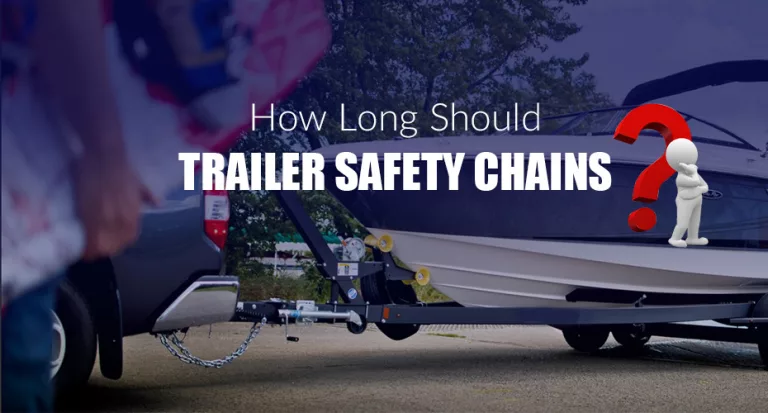
How Long Should Trailer Safety Chains Be?
Trailer Safety chains are designed to provide a backup connection between the trailer and the tow vehicle.It will keep towing safety when the coupler or hitch connection fails. However, simply installing a safety chain is not enough. The length of the trailer safety chain is a key fator in towing safety.
If too short may restrict turning movement and create excessive stress. If too long may drag on the road or fail to properly support the trailer tongue during an emergency. What Is the proper length of trailer safety chain? The answer depends on your trailer size, hitch setup, attachment points, and the amount of slack required for safe operation. Today we will share proper length of trailer safety chain, why length matters, how to measure length, hope these will help you to get right trailer safety chain.
Table of Contents
What Is The Proper Length for Trailer Safety Chains?
There is no single universal length that works for each trailer. The correct safety chain length is the one that allows normal trailer movement while maintaining a secure connection.
In most trailer applications, common safety chain lengths are:
| Trailer Type | Common Safety Chain Length |
|---|---|
| Small utility trailer | 18–24 inches |
| Boat trailer | 24–36 inches |
| ATV and cargo trailer | 24–36 inches |
| Car hauler trailer | 36–48 inches |
| Heavy equipment trailer | 48 inches or longer |
These length usually refers to the overall chain assembly length, including the chain and hooks.
The ideal length should provide enough flexibility for turning but should not allow the chain to touch the road surface.
Why Trailer Safety Chain Length Matters
Trailer safety chain is to prevent a trailer from completely separating from the tow vehicle.
If the trailer coupler fails, safety chains can support the trailer tongue, help the driver maintain control and reduce the risk of a runaway trailer
However, chain length directly affects the system works.
If the Safety Chain Is Too Short
A chain that is too short can create several problems:
1. Limited Turning Ability
During a sharp turn, the trailer moves at an angle compared with the tow vehicle. If the chains have no extra slack, they can become tight and restrict movement.
This may cause:
- Excessive force on chain hooks
- Stress on mounting brackets
- Difficulty making tight turns
2. Increased Load on Components
A tight safety chain works like a rigid connection. Sudden movement, bumps, or braking can create shock loads on the chain and attachment points.
If the Safety Chain Is Too Long
A longer chain may seem safer because it provides more flexibility, but excessive length can create new risks.
Common problems:
- Chain dragging on the highway
- Damage from road contact
- Reduced ground clearance
- Increased corrosion and wear
- Chain catching obstacles
Trailer Safety chain can also create a dangerous situation for other drivers.
How to Measure Trailer Safety Chain Length
When Choosing the correct chain length, please follow these steps.
Step 1: Measure Between Connection Points
First, measure the distance between:
The trailer safety chain attachment point
The safety chain connection point on the tow vehicle hitch
Do this with the trailer properly connected to the tow vehicle.
Remember that the distance may change depending on:
- Hitch design
- Trailer frame structure
- Chain hook location
Step 2: Add Enough Slack for Turning
Safety chains should have enough slack to allow:
- Left turns
- Right turns
- Uneven roads
- Normal trailer movement
A properly installed chain should never become fully tight during normal driving.
However, the chain should also remain high enough that it does not drag.
A good practice is to connect the chains, drive slowly through a full turning range, and check whether the chains remain secure without excessive movement.
Step 3: Check the Chain Position After Installation
After connecting the trailer:
Make sure the hooks are fully engaged
Confirm the chains are not twisted
Ensure the chains do not hang too low
Verify that the chains do not interfere with turning
Many towing problems happen because the chain itself is correct, but the installation position is wrong.
Should Trailer Safety Chains Be Crossed?
Yes, in many towing applications, safety chains are installed in a crossed pattern.
The left-side trailer chain connects to the right-side hitch attachment point, and the right-side trailer chain connects to the left-side hitch attachment point.
Why?
Because crossed chains create a support cradle under the trailer tongue.
If the coupler disconnects, the crossed chains can help:
- Prevent the tongue from dropping completely
- Reduce contact between the trailer and the road
- Provide additional control during an emergency
However, crossing the chains does not replace proper sizing. The chains still need enough length to allow normal turning.
How Much Slack Should Trailer Safety Chains Have?
One of the most common questions from trailer owners is:
“How much slack should trailer safety chains have?”
The answer is:
The chains should have enough slack for full turning movement but not enough slack to drag.
The correct amount depends on:
- Trailer design
- Hitch height
- Chain mounting location
- Vehicle turning radius
A properly installed safety chain usually hangs slightly below the hitch connection point while maintaining safe ground clearance.
The goal is not to make the chain tight. Safety chains are designed to support the trailer during an emergency situation.
Does Trailer Weight Affect Safety Chain Length?
Many buyers confuse chain length with chain strength.
They are two different factors.
The trailer weight determines the required:
- Chain diameter
- Chain grade
- Working Load Limit (WLL)
- Hook strength
For example:
1. Grade 43 Chain
Commonly used for:
- Utility trailers
- Light-duty towing
- General cargo applications
2. Grade 70 Chain
Commonly used for:
- Car haulers
- Equipment trailers
- Heavy-duty tie-down applications
A longer chain does not automatically mean a stronger chain.
When selecting trailer safety chains, always check the working load limit and chain grade.
Common Mistakes When Choosing Trailer Safety Chain Length
Using the Same Length for Every Trailer
Different trailers have different designs. A boat trailer, utility trailer, and equipment trailer may require different chain lengths.
Always measure your actual towing setup.
Choosing Chain Length Without Considering Hooks
The usable length of a safety chain assembly depends on more than the chain itself.
It includes:
- Chain length
- Hook size
- Connecting hardware
- Attachment points
A large grab hook or clevis hook can change the final installed length.
Ignoring Chain Wear and Damage
Even a correctly sized chain can become unsafe over time.
Before towing, inspect:
- Broken links
- Bent hooks
- Excessive rust
- Damaged welds
- Worn attachment points
Replace damaged safety chains immediately.
How to Choose Right Trailer Safety Chain for Your Application
When buying trailer safety chains, length is only one consideration.
A reliable safety chain should match:
1. Trailer Weight
Choose a chain with the correct working load limit.
2. Chain Grade
Common options include:
Grade 30 proof coil chain
Grade 43 high test chain
Grade 70 transport chain
3. Hook Type
Popular hook options include:
Slip hooks
Grab hooks
Clevis hooks
4. Surface Protection
For outdoor towing environments, galvanized safety chains provide better corrosion resistance.
Conclusion
Understanding proper length for trailer safety chain, correct installation, the affection of proper length, are important factors in towing. It will keep towing safety when the coupler or hitch connection fails. If you have any question about trailer safety chain, please feel free to contact Sail Rigging.