


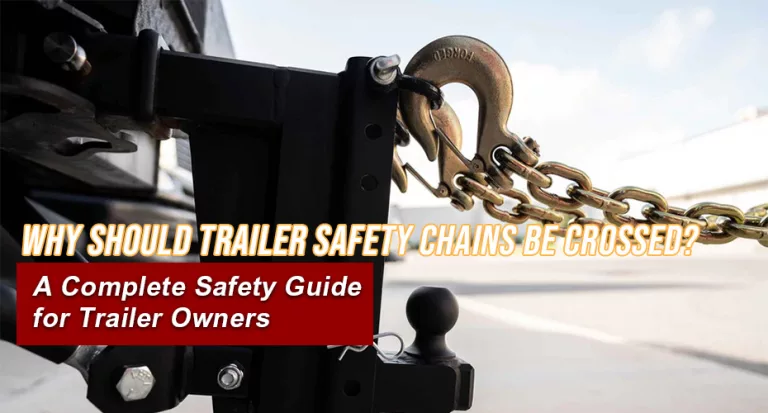
Why Should Trailer Safety Chains Be Crossed? A Complete Safety Guide for Trailer Owners
Trailer safety chains are simple but crucial towing equipment. When towing a utility trailer, boat trailer, car trailer, or equipment trailer, it will provide a backup connection between the trailer and the tow vehicle in case the coupling fails.
We are often asked Why should you cross the trailer safety chains? Today we will share some knowledge about
why cross trailer safety chains, how it works, and the correct way to connect the safety chain before each trip.
Table of Contents
What Is A Trailer Safety Chain?
Trailer safety chains are designed to keep the trailer attached to the tow vehicle in case the connector accidentally detaches from the ball hitch.
Although trailer hitches are designed to maintain a secure connection, accidents may still occur due to the following reasons:
- Improper hook installation
- Coupler wear or damage
- Hook assembly failure
- Unintentional disengagement
- Road impact and vibration
When the trailer detaches from the hitch, the safety chain serves as the last line of defense. Without them, the trailer could completely break free, posing a danger to the driver and other road users.
Safety chains are widely used for:
- Utility trailer
- Boat trailer
- Equipment trailer
- RV trailer
- Car transport trailer
What does crossing the security chain mean?
Crossed safety chains mean connecting the left chain to the right attachment point on the tractor and the right chain to the left attachment point.
This will form an “X” pattern beneath the trailer tongue.
The chain is not directly suspended on either side of the hook, but instead runs beneath the coupler and trailer tongue before connecting to the tow vehicle.
Although this installation method requires only a few extra seconds, it offers several important security advantages.
Create a secure bracket under the trailer tongue
The primary purpose of a cross safety chain is to create a support structure beneath the trailer tongue.
If the trailer becomes detached from the ball hitch, the cross chains help catch and support the trailer tongue before it hits the ground.
Without the cross chain, the tongue could fall directly onto the sidewalk. This might result in:
- Coupler damage
- Trailer jack damage
- Scratches on the trailer frame
- Sparks generated by metal contact with the road surface
When the chains are properly crossed, they act like slings, helping to support the front of the trailer until the driver can safely stop.
Helps Maintain Better Vehicle Control
A trailer that falls onto the sidewalk will quickly become unstable.
If the tongue gets stuck on the ground, the trailer may:
- Violent bouncing
- Side-to-side swaying
- Unexpected trailer pull
- Becomes difficult to control
A cross safety chain helps keep the trailer aligned behind the towing vehicle. By supporting the tongue and reducing excessive movement, the chain assists the driver in maintaining steering control while ensuring a safe stop.
Although safety chains cannot 100% eliminate the effects of trailer separation, they can significantly reduce the severity of the situation.
Reducing Damage to Trailer Components
Repairing a damaged trailer tongue can be expensive.
When the trailer tongue hits the ground, multiple components may be damaged, including:
- Coupler assembly
- Trailer jack
- Wiring harness
- Separable cable
- Trailer frame components
Cross chains prevent direct impact with the road surface, helping to reduce these risks and save repair cost.
Enhancing Safety for Other Road Users
A detached trailer can pose a major hazard to nearby vehicles.
If the trailer remains connected via a cross safety chain, the driver has a better chance of maintaining control and safely pulling over.
This reduces the following risks:
- Multi-vehicle collision
- Property damage
- Road obstacles
- Other drivers injured
Therefore, securing the safety chain is considered one of the most important trailer safety practices.
What happens if the safety chain doesn’t cross?
Many trailer accidents are related to improper safety chain connections.
When the chains are not cross-connected:
- The trailer tongue may hit the ground.
Without support beneath the tongue, the front of the trailer could immediately drop onto the sidewalk.
- The trailer began to sway even more violently.
The trailer may sway from side to side, making it more difficult to control.
- Electrical connection may be damaged
If the trailer suddenly detaches, the wiring harness and trailer plug may be stretched or torn.
How to Cross Trailer Safety Chain Properly?
For trailers equipped with electric brakes or breakaway safety braking systems, wiring damage may reduce braking effectiveness.
These risks highlight why experienced trailer operators always cross-connect safety chains.
How to Cross Trailer Safety Chain Properly?
Step 1: Check the chain
Before each trip, please check for the following issues:
- Chain link bending
- Excessive wear
- Corrosion
- Cracks
- Hook damage
If chain damage is found, replace it immediately.
Step 2: Cross-connect the chain
Connect the left chain to the right connection point, and connect the right chain to the left connection point.
The chain should form an “X” shape below the trailer tongue.
Step 3: Check Chain Length
The chain length should be sufficient to allow for movement around corners without binding.
Aslo the chain should not drag on the ground.
Step 4: Secure the hook
Ensure all hooks are properly connected; if the hooks have safety latches, make sure they are functioning correctly.
Step 5: Confirm the gap and position
After connecting the trailer, perform a final check to ensure the chains are properly crossed and positioned below the coupler.
Common Mistakes in Safety Chain Connection
Even experienced trailer owners sometimes make mistakes.
The most common mistakes include:
- Failure to cross-link the chains
- Using chains that are too long
- Using chains that are too short
- Attaching chains to improper anchor points
- Using chains of insufficient size
- Ignoring chain wear and corrosion
Regular inspection and proper installation will help to prevent above mistake.
Choosing the Right Trailer Safety Chain
In addition to proper installation, selecting the right chain is also crucial.
Factors to consider include:
- Gross Vehicle Weight Rating (GVWR)
- Chain grade
- Working load limit
- Hook type
- Corrosion resistance
Grade 43 and Grade 70 chains are recommended options for trailers. Just make sure load capacity meet or exceed the trailer’s weight requirements.
Conclusion
Cross trailer safety chains is simple but important step . By forming a cradle-like support structure beneath the trailer hitch, cross trailer safety chains can hold the trailer in place. When towing connection fails, it will improve vehicle control, reduce equipment damage, and enhance road safety for everyone around. Taking the time to correctly connect the safety chains can make a crucial difference in the event of an unexpected trailer separation. If you have any question about trailer safety chain, don’t hesitate to contact Sail Rigging.