
How To Use Safety Chains?
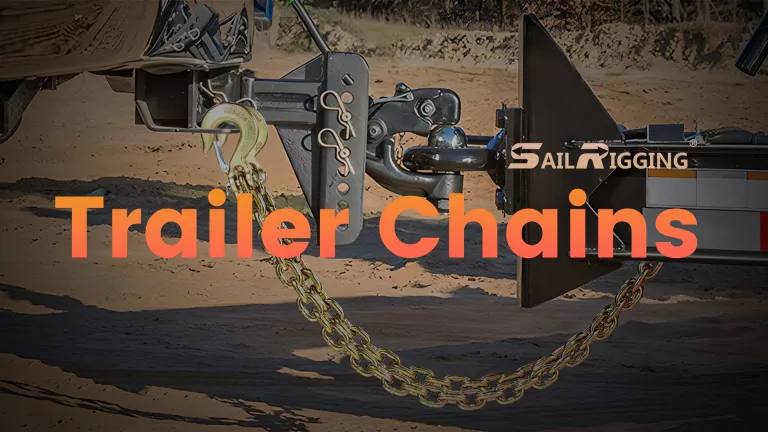
Safety chains, as one of the most important parts of a trailer, are essential for safe towing of a trailer. As the name implies, a safety chain is a chain that links the trailer’s drawbar and the towing vehicle to ensure that the trailer is properly connected to the towing vehicle.
How should safety chains be used with a trailer hitch ?
- Two safety chains are required, choose the safety chains of the correct length, cross the safety chains under the hook and coupler, and flow out enough slack to turn and tow the towing rope when the trailer is loose.
- During connecting the trailer, make sure that the chains are connected to the emergency brake box , also the chain is shorter than the trailer safety chain. If the chain connected to the emergency brake box is longer than the safety chain, the brake box will not start.
- Before moving the trailer, pls make sure that the safety chain is fixed to the towing vehicle. Stop and check regularly during towing.
- Regularly check the chains and hooks for wear or damage, and replace any worn or damaged chains and hooks before towing again.
- Check your safety chain for the correct classification for the gross vehicle weight rating (GVWR). The strength rating (minimum breaking force) of each section of safety chain or its equivalent and its attachments must equal or exceed the GVWR of the trailer.
- Stop and check the chain regularly, replace any worn safety chains, and never drag the safety chain while driving.
The Classification Of Safety Chains
| Safety Chain Or Trailer Classification | Breaking Force Minimum |
| Class 1 | 2000lbs |
| Class 2 | 3500lbs |
| Class 3 | 5000lbs |
| Class 4 | 10000lbs |
Different states have different legal requirements for safety chains. Please refer to local laws and regulations when installing safety chains.
Different Grades Of Trailer Safety Chains
Sail Rigging’s safety chain Meet the latest revision of NACM specifications and D.O.T. regulations, have Grade 30 chain, Grade 43 chain, Grade 70 chain. We have bulk chain and chain hook assemblies, the following is common different chain hook assemblies.
Grade 30 Proof Coil Chain
G30 chain is made of carbon steel, usually with white galvanized or original color or hot dip galvanized, and its safe working load limit is 375lbs-17900lbs. It is a general purpose chain suitable for farms, industries and homes, such as log chains, traction, cargo tie-downs, guardrails, etc.

Grade 43 High Test Chain Hook
G43 high-strength chain is made of carbon steel with tensile strength and wear resistance. Its working load limit is higher than ordinary low-carbon chain or general-purpose chain. Compared with G30 grade corrosion-resistant chain, both are used for bundling, logging and tying applications, but not for overhead lifting. It can meet the needs of modern transportation and heavy trucks, agriculture and construction companies.

Grade 70 Transport Chain Hook
G70 chain is made of heat-treated carbon steel and is strong and durable. Grade 70 industrial chain usually uses a gold chromate coating for easy identification and anti-wear and anti-scratch functions. Grade 70 chain is about 20% stronger than grade 43 chain and is ideal for fixing and pulling large or heavy loads in truck transportation, logging and road transportation applications.

More Articles You May Like
Types And Application Of Rigging Hooks
How To Properly Use Safety Chains?
Question
For any question on safety chains or our other chain and accessories, contact one of our product experts today!