
When securing heavy loads for transportation, selecting the right tool for the job is crucial to ensuring both safety and efficiency. Two of the most commonly used equipment options for securing loads are tie-down chains and tow straps. Both are very important for transport, serve to secure cargo during transit, but each comes with its own set of strengths and limitations.
This article will compare tie-down chains and tow straps, outlining why a tie-down chain might be the better choice for certain applications.
1. Load Capacity and Strength
Tie-Down Chain:
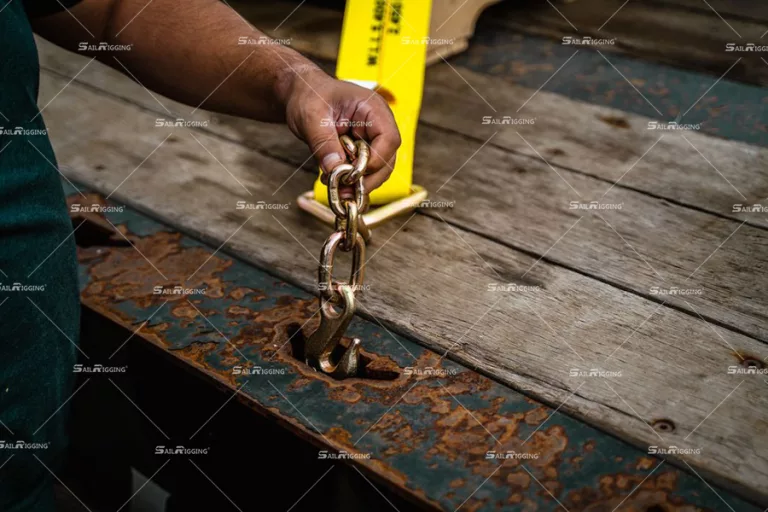
- Superior Strength:Tie-down chains are typically made from high-strength materials like steel or alloy steel, making them incredibly strong and durable. They can support heavy loads, often ranging from 1,000 lbs to 50,000 lbs or more, depending on the chain’s grade and thickness.
- Consistent Load-Bearing:The working load limit (WLL) of a tie-down chain is more easily determined because of its rigid and non-stretchable This makes them a safer option for heavy-duty applications, such as construction equipment, machinery transport, and trucking.
Tow Strap:
- Flexible but Limited Capacity:Tow straps, while durable, are generally made from nylon or polyester webbing, which allows for some stretch under tension. While they can carry significant loads (typically from 2,000 lbs to 10,000 lbs), their stretchable nature means they may not always provide the same secure hold as a chain under extreme stress.
- Elasticity Issues:The stretching ability of a tow strap can be a disadvantage when securing a load, as it may slack or shift over time, especially when subjected to heavy or dynamic loads.
2. Durability and Longevity
Tie-Down Chain:
- Long-Lasting:Tie-down chains are made of metal and are typically coated for corrosion resistance (e.g., galvanized steel or stainless steel), making them highly durable and resistant to abrasion, weather, and environmental exposure. With proper maintenance, they can last for many years.
- High Resistance to Wear and Tear:Even under repeated use in demanding environments (such as construction or marine transport), tie-down chains retain their structural integrity.
Tow Strap:
- Prone to Wear:Tow straps are often made from fabric-like materials, which can wear out faster due to exposure to abrasive surfaces, UV light, and weather conditions. Tow straps can fray, tear, or lose tensile strength over time.
- UV and Moisture Damage:UV exposure can weaken the fibers, and exposure to moisture (rain, snow, etc.) can cause the straps to absorb water, weakening their structure and leading to quicker degradation.
3. Versatility and Use Cases
Tie-Down Chain:
- Heavy Duty Applications:Tie-down chains excel in securing heavy machinery, construction equipment, vehicles, and large cargo during transport. They are commonly used in the trucking, marine, and towing
- Adjustable and Secure:Tie-down chains come with various connectors, such as clevis hooks, delta rings, or eye hooks, making them adaptable for different types of tie-down points. Their rigid structure means they provide consistent tension, ensuring secure load restraint.
Tow Strap:
- Ideal for Tow Vehicles:Tow straps are designed for lighter-duty applications, such as towing cars or recovery operations. They are commonly used for pulling or recovering a vehicle that is stuck or disabled.
- Flexible Connection:Tow straps are generally used for securing smaller loads or for quick recovery situations where flexibility and ease of use are more important than maximum strength.
4. Ease of Use and Setup
Tie-Down Chain:
- More Time-Consuming:Securing loads with a tie-down chain often requires more time and effort to attach and tension. Ratchets, binders, or tightening mechanisms may be needed to ensure the chain is secure, which can take more time than a tow strap. However, this added effort ensures a secure hold.
- Stable Connection:Once in place, a tie-down chain offers a stable, secure hold without the need for frequent readjustment during transit.
Tow Strap:
- Quick and Easy:Tow straps are incredibly easy to use. They often come with hooks or loops at both ends, which can be quickly attached to a vehicle or anchor point. This makes them ideal for situations that require rapid setup or where securing a load isn’t as critical.
- Less Stable:Tow straps are flexible and often require more attention during transit, as they can slacken or shift with the load. They may also require re-tightening after long distances or if the load shifts.
Winner: Tow Strap – If ease and speed of use are more important than maximum security, the tow strap offers a quicker, simpler solution. However, this comes at the cost of less stability during transport.
5. Cost and Availability
Tie-Down Chain:
- Higher Cost:Due to the higher materials cost (metal chains, hooks, and additional hardware), tie-down chains tend to be more expensive than tow straps.
- Long-Term Investment:While the initial cost is higher, a tie-down chain can offer a better return on investment due to its long lifespan and superior strength, making it cost-effective in the long run for heavy-duty applications.
Tow Strap:
- More Affordable:Tow straps are generally much cheaper compared to tie-down chains. They are a cost-effective option for light-duty tasks or for temporary use.
- Easier to Replace:Since tow straps wear out quicker, they can be easily replaced at a lower cost.
Winner: Tow Strap – For cost-conscious users looking for a short-term or light-duty solution, the tow strap is the more affordable option.
If you need a strong, secure solution for heavy loads in industrial, construction, or marine applications, tie down chains are 1st choice, more durable, can handle greater loads, and provide stability and security over long distances. Especially in winter, tie-down chains are the superior choice, they provide maximum strength and a non-stretchable connection, could be more durablility and less susceptible to wear over time. If you still have any doubt about tie down chains, don’t hesitate to contact Sail Rigging. We will be glad at service.