
How to Test Powder Coating Adhesion on Load Binders?
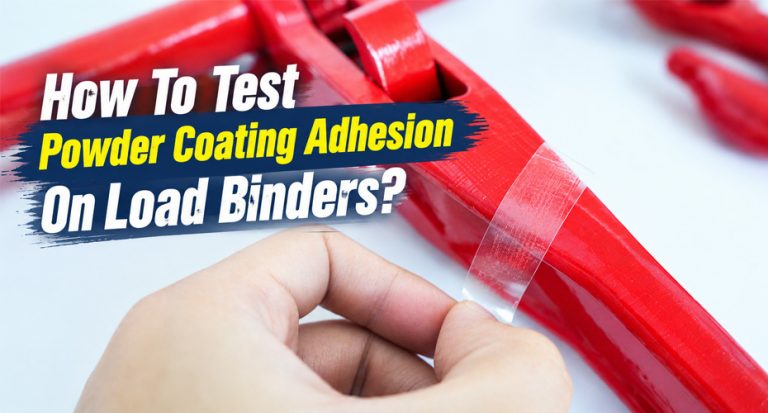
The cross-cut test is a crucial method for evaluating the adhesion quality between the coating and the steel surface of tensioning devices. Although these devices may appear robust on the outside, visual inspection alone cannot determine the bonding strength between the powder coating and the steel substrate. If the coating has poor adhesion, any scratches or damage to the surface could lead to chipping or peeling of the coating. Once the steel surface becomes exposed, corrosion issues may arise.
This is why powder coating adhesion testing is an important part of quality control for load binders.
Table of Contents
What Is a Powder Coating Adhesion Test?
A powder coating adhesion test checks how well a cured coating remains attached to the metal substrate.
For load binders, the substrate is normally steel. The powder coating is applied to the prepared steel surface and then cured under controlled conditions.
The cross-cut method works by making two sets of cuts at right angles to create a lattice pattern. Adhesive tape is then applied and removed. The amount of coating that comes away from the surface is evaluated.
It is important to understand that a cross-cut test is not a direct measurement of adhesion strength. ISO 2409 describes it as an empirical classification method rather than a measurement of adhesion force.
Why Is Powder Coating Adhesion Important for Load Binders?
Load binders are frequently handled in demanding environments.
They may be:
- Stored outdoors
- Used on trailers and flatbed trucks
- Exposed to rain and humidity
- Dragged or placed on steel surfaces
- Subjected to repeated handling
- Exposed to dirt and road debris
Poor adhesion coating can be more vulnerable to peeling, chipping, or flaking when the surface is damaged.
Good adhesion helps the coating remain attached to the steel substrate.
How to Perform a Cross-Cut Test on a Load Binder
The exact test procedure should follow the applicable standard or customer specification. The following steps explain the basic principle.
Step 1: Prepare the Test Surface
Select a load binder with completed the powder coating and curing process.
The test area should be clean and dry. Dirt, the location of the test should also be documented so results can be compared between batches.
Step 2: Make the Cross-Cut Pattern
Use an appropriate cross-cut tool to make a series of parallel cuts through the coating.
Then make another series of cuts perpendicular to the first set.
The result is a small grid of squares.
The spacing and cutting procedure should be selected according to the applicable testing method, coating thickness, and substrate.
Step 3: Apply the Adhesive Tape
Place the specified pressure-sensitive tape over the cross-cut area.
The tape should make good contact with the test surface.
It is important because the tape is used to pull against the coating and reveal areas where the coating has insufficient resistance to separation.
Step 4: Remove the Tape
Remove the tape according to the selected test procedure.
Do not simply change the pulling direction or technique from one test to another. Consistency matters when comparing production results.
ASTM D3359 also emphasizes that operator technique can affect the consistency of tape-test results. ([ASTM Store][2])
Step 5: Inspect the Cross-Cut Area
After removing the tape, inspect the grid.
Look for:
- Coating removed from the squares
- Peeling along the cuts
- Flaking
- Exposed steel
- Lifting around the cut edges
The result can then be classified according to the selected testing standard.
Watch a Load Binder Cross-Cut Test
Here is an actual load binder cross-cut testing video showing the basic testing process:
How Do You Read the Test Result?
A good cross-cut result generally shows that the coating remains attached around most of the grid.
If significant areas of coating are removed by the tape, the coating system may have insufficient resistance to separation under the selected test conditions.
ISO 2409 provides a six-step classification system when classification is appropriate. The standard also allows the method to be used as a pass/fail test when that is how the test has been specified.
However, buyers should avoid assuming that one rating is automatically acceptable for every load binder.
What Affects Powder Coating Adhesion?
A poor cross-cut result does not necessarily mean that the powder itself is the only problem.
Several factors May affect adhesion
1. Surface Preparation
Steel should be cleaned before testing. Oil, grease, rust, scale, or contamination can interfere with bonding.
2. Curing Conditions
Powder coating needs the correct curing conditions.
Insufficient or inconsistent curing can affect the final coating performance.
3. Coating Thickness
Coating thickness should be controlled during production.
Very thick coatings may behave differently during cutting and testing, while insufficient coating may not provide the intended surface protection.
4. Base Material Condition
The condition of the steel surface also matters. Different manufacturing processes can leave different surface conditions that require appropriate preparation.
5. Testing Technique
The cutting tool, tape, test environment, and operator technique can all influence results. ASTM D3359 notes that tape adhesion can vary with coating characteristics and that operator skill affects consistency.
Cross-Cut Test vs. Other Coating Tests
A cross-cut test is only one part of coating quality control.
| Test | Main Purpose |
|---|---|
| Cross-Cut Test | Evaluate coating resistance to separation |
| Coating Thickness Test | Check coating thickness |
| Salt Spray Test | Evaluate corrosion resistance under specified conditions |
| Visual Inspection | Check surface appearance and defects |
| Other Mechanical Tests | Evaluate specified performance characteristics |
These tests answer different questions.
For example, a coating can have the required thickness but still require an adhesion check. Likewise, a good cross-cut result does not replace corrosion testing when corrosion performance is part of the specification.
How SailRigging Control Load Binder Coating Quality
For a load binder manufacturer, coating quality starts well before the cross-cut test.
A typical quality-control process can include:
Surface Preparation → Powder Coating → Curing → Coating Inspection → Cross-Cut Test → Final Inspection
The cross-cut test provides a practical way to check the finished coating. It can also help manufacturers identify process problems before products are shipped.
Conclusiohn
The cross-cut test provides a practical method for evaluating the coating’s resistance to separation from the steel substrate. A consistent coating process and documented quality control provide a much clearer picture of product quality.If you have any question about cross-cut test of load binder, please feel free to contact us.