


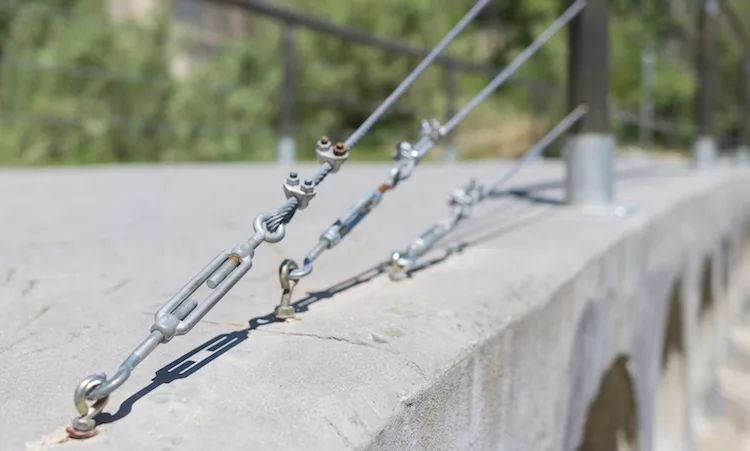
A DIN 1480 turnbuckle, also known as a rigging screw or tension screw, is a mechanical device designed for the precise adjustment and regulation of tension in various applications. It consists of a central body with threaded ends, typically featuring one right-hand thread and one left-hand thread. This unique design allows for easy and controlled length adjustment by turning the central body, effectively altering the distance between the threaded ends. DIN1480 turnbuckles could be equipped with different fitting, such as jaw & jaw turnbuckle, hook & hook turnbuckle, eye & eye turnbuckle, etc. DIN 1480 turnbuckles are widely used in different industries due to their versatility and reliability. Let’s delve deeper into the key features of DIN 1480 turnbuckles:
Key Features of DIN 1480 Turnbuckles:
1.Threaded Ends with Opposite Threads:
DIN 1480 turnbuckles are characterized by their threaded ends, which feature one right-hand thread and one left-hand thread. This opposing thread configuration allows for synchronized expansion or contraction when the central body is turned, making tension adjustment precise and easy.
2.Materials and Durability:
These turnbuckles are typically crafted from high-quality materials, with common choices being steel and stainless steel. The choice of materials ensures strength, durability, and resistance to corrosion, making DIN 1480 turnbuckles suitable for both indoor and outdoor applications.
3.Versatility in Sizes and Load Capacities:
DIN 1480 turnbuckles are available in various sizes and load capacities, ranging from small, light-duty models to larger, heavy-duty ones. This wide range of options makes them adaptable to a diverse array of applications.
4.Safety Nuts for Added Security:
In some DIN 1480 turnbuckle designs, safety nuts may be incorporated. These nuts serve as an additional security feature, preventing accidental loosening during operation. They ensure that the turnbuckle remains securely in place, enhancing safety in various applications.
5.Ease of Adjustment:
One of the standout features of DIN 1480 turnbuckles is their simplicity in adjustment. By turning the central body, users can either extend or retract the length of the turnbuckle, thereby modifying the tension in the connected components. This ease of adjustment makes them user-friendly and practical in various scenarios.
6.Wide Range of Applications:
DIN 1480 turnbuckles are employed in diverse industries, including construction, maritime, theatrical rigging, aerial rigging, and agriculture. In construction, they are used for bracing, scaffolding, and concrete formwork. In maritime applications, they secure sails and rigging. Theatrical and aerial rigging professionals rely on them for setting up stage equipment and suspending performers. In agriculture, they are employed for fencing and structural support.
7.Customization Options:
Many manufacturers offer customization options, allowing customers to tailor the turnbuckle to their specific requirements, such as load capacity, length, and material composition.
In conclusion, DIN 1480 turnbuckles are versatile tools that have found applications in numerous industries due to their reliability, adjustability, and durability. Whether you’re adjusting the rigging of a sailboat, tensioning a stage setup, or securing a fence on a farm, DIN 1480 turnbuckles are vital components for achieving precision and safety in a wide range of scenarios. Their unique threaded design, materials, and ease of adjustment make them an essential choice for professionals across various fields. If you want to learn more about DIN1480 turnbuckles, you could contact Sail Rigging Now!