


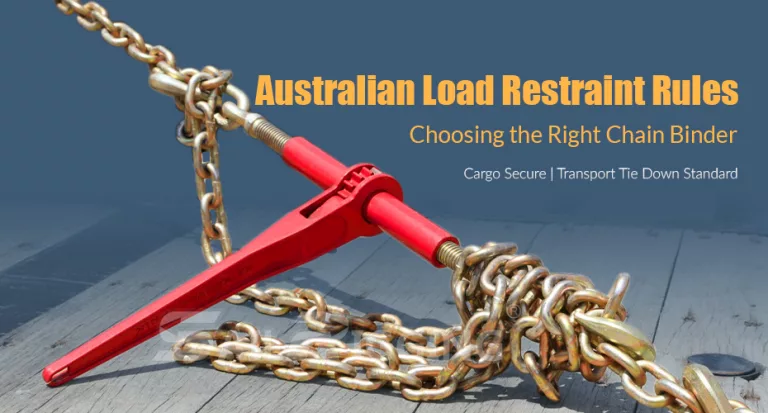
Australian Load Restraint Rules: Choosing the Right Chain Binder
In Australia and New Zealand, transportation safety regulations are becoming stringent, particularly in heavy transport, machinery, agriculture, mining, and construction equipment. When transporting excavators, steel structures, containers, or oversized cargo, a reliable load restraint system is essential for road securement.
Chain binders play a crucial role in cargo securing equipment. Selecting the right load binder is not only essential for properly securing goods but also necessary to meet transportation compliance requirements and reduce operational risks.
This guide will explain Australian load restraint requirements and guide you on selecting the appropriate chain binders for heavy duty transport applications.
Table of Contents
Why Complying with Cargo Securing Regulations is Crucial in Australia
Australia is one of the high demanding load restraint in the world. Long trucking routes, rough terrain, and extreme weather conditions place immense stress on cargo securing systems.
Improper cargo securing may lead to the following consequences:
- Cargo shifting during transportation
- Trailer losing stability
- Damage to machiner or cargo
- Road traffic accidents and casualties
- Substantial fines for transportation violations
Given the above risks, Australia’s National Load Restraint Guide (NRLG) provides detailed recommendations on how to securely secure cargo during transportation.
In Australia and New Zealand, transport operators should use right chains and binders properly, matched that their rated loads comply with safety standards.
What is a chain tensioner?
A chain binder, also known as a load binder, is a tensioning device used in conjunction with transport chains to secure heavy cargo during transit.
The ratchet strap effectively prevents cargo from shifting during vehicle operation by applying tension to the chain. Chain ratchets are commonly used in the following scenarios:
- Flatbed trailer transportation
- Heavy equipment trailer transportation
- Agricultural machinery transportation
- Mining vehicle transportation
- Construction materials transportation
In Australia, cargo binders are typically used in conjunction with Grade 70 transport chains or higher-strength chain systems.
Even a high-quality conveyor chain cannot effectively secure cargo in place without proper tension.
Understanding Australia’s Cargo Securing Requirements
One of the most important considerations in cargo securing is the “Working Load Limit” (WLL). According to Australian cargo securing regulations, every component within a securing system must have an appropriate rated load, including:
- Transport chain
- Chain binder
- Anchor point
- Hooks and connectors
The Working Load Limit (WLL) of the fastener should match the chain being used. Using a fastener with an insufficient rated load in conjunction with high-strength transport chains creates a weak point in the system, thereby increasing safety risks.
For example, using a Grade 70 transport chain with a low-load-capacity fastener may cause the entire securing system to fail during emergency braking or evasive maneuvers of the vehicle.
Another common compliance issue is the use of damaged or worn fasteners. Bent handles, deformed or stretched hooks, cracked components, or damaged threads can significantly reduce their load-bearing capacity.
Australian transport inspectors often pay special attention to cargo securing systems during roadside checks, particularly for oversized load vehicles or commercial heavy-duty transport vehicles.
Ratchet Binder and Lever Binder
The two common types of chain tensioners are ratchet binder and lever binder.
Ratchet Binder
The ratchet load binder uses a threaded tightening mechanism that gradually tightens the chain. Operators can precisely control chain tension with minimal physical effort.
Its advantages include:
- Safer operation
- More precise tension control
- Reduced risk of injury from rebound
- Easier tension adjustment during long-distance transportation
It is precisely due to these safety advantages that ratchet tie-downs are becoming increasingly popular in the transportation industry in Australia and New Zealand.
Lever binder
The lever binder uses a handle with a cam action to quickly tighten the chain.
Although lever binder operate quickly, they carry a relatively high risk of injury due to rebound if released improperly. The sudden recoil of the handle at the moment of release may cause serious physical harm to the operator.
Currently, some transportation companies in Australia have begun favoring ratchet-type fasteners for heavy cargo operations, as these fasteners provide more stable tension and effectively enhance operator safety.
How to Choose the Right Chain Tensioner
Selecting the right chain tensioner requires considering several important factors.
- Matching Chain Size and Grade
Chain binder must match the transport chain used in both size and grade. Common transport chain sizes include:
- 1/4 inch
- 5/16 inch
- 3/8 inch
- 1/2 inch
Using a chain binder with an incorrect size not only affects the chain tensioning performance but also poses a potential safety hazard to the overall system.
2. Verify Working Load Limit (WLL)
Ensure that the selected fastener’s Working Load Limit (WLL) meets or exceeds the load requirements of the entire chain securing system. Professional transport operators typically choose heavy-duty forged fasteners to handle high-stress applications such as transporting mining equipment and hauling oversized machinery. # Consider corrosion resistance
Australia’s transportation environment often involves dust, rain, mud, and coastal climate.
Compared to paint or electroplated surface treatments, hot-dip galvanized load binders offer superior corrosion protection when used outdoors.
Excellent corrosion resistance significantly extends the service life of equipment for mining and marine transportation applications.
Common Chain Tensioner Issues and Inspection Recommendations
Regular inspections are essential to ensure cargo is securely fastened.
Common chain tensioner issues include:
- Hook deformation
- Handle bending
- Thread damage
- Corrosion and rust
- Cracks in forged components
- Excessive wear at pivot points (rotating joints)
Operators should inspect the fastener before each transport and immediately replace any damaged parts.
A reliable cargo securing system depends on the condition of every component for its safety, not just the transport chain itself.
Why Australian buyers prefer forged load binder
In Australia and New Zealand, forged load binder are widely regarded as the preferred choice over lower-grade cast products due to their superior performance.
Forged load binders typically offer the following advantages:
- Higher strength
- Superior fatigue resistance
- Greater durability
- Longer service life
The mining, construction, and heavy transportation industries often require fasteners to undergo proof load testing and to come with traceable manufacturing records.
Many professional buyers also have the following requirements:
- Material Test Certificate (MTC)
- Load Verification Test Report
- Third-Party Inspection and Certification
- Batch Traceability
For industrial transport hardware suppliers serving the Australian market, meeting these requirements is becoming increasingly common.
Conclusion
In Australia and New Zealand, cargo securing is a critical aspect of transport safety. Choosing the right chain binder helps improve cargo stability, reduce accident risks, and ensure compliance with transportation regulations.
Whether using a ratchet-type or lever-type load binder, operators must always ensure that the tensioner matches the grade of the transport chain, its working load limit (WLL), and the actual application environment.
For long-term performance and safety, high-quality forged chain binder that have undergone rigorous testing and feature comprehensive corrosion protection remain the preferred choice for professional transportation and heavy-duty cargo towing operations. If you have any question about load binder, don’t hesitate to contact Sail Rigging.