
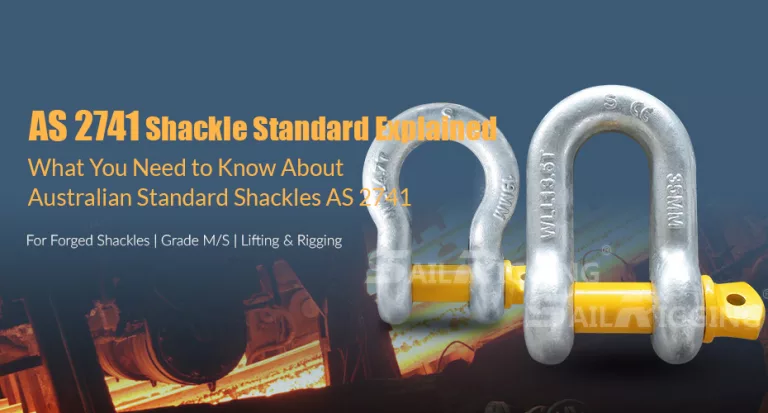
AS 2741 Shackle Standard Explained: What Need to Know About Australian Standard Shackles
In lifting and rigging, shackles are one common used rigging hardware. From mining sites and offshore engineering to construction lifting systems, the reliability of shackles directly impacts operational safety. In Australia, AS 2741 is widely recognized standard for shackles.
Understanding AS 2741 shackle standard is essential for selecting safe and compliant lifting hardware. This article explains what is AS 2741 standard, including materials, testing, marking, and differences between Australian and U.S. standards.
Table of Contents
What is AS 2741?
AS 2741 is an Australian standard of forged alloy steel shackles in lifting operations. This standard applies to bow shackles and D shackles designed for heavy duty rigging and lifting applications.
Shackle In mining, oil and gas, offshore transportation, and infrastructure construction typically should comply with AS 2741 standards, as these environments involve high loads and harsh operating conditions.
Compared to standard commercial shackles, AS 2741 shackles are manufactured to stricter strength and testing requirements. Most products under this standard are S-grade shackles, known for their high tensile strength and durability.
Common applications include:
- Crane lifting system
- Rescue and towing equipment
- Offshore lifting operations
- Mining Rigging System
- Heavy-duty transport securing
Due to their excellent strength and safety performance, shackles compliant with Australian standards are also widely exported to markets outside Australia.
AS 2741 Material Requirements for Shackles
One of the main differences between AS 2741 shackles and low-grade shackles lies in material quality.
AS 2741 requires shackles to be made from high-strength steel with controlled mechanical properties. Most forged shackles are manufactured from high-strength carbon steel or alloy steel and undergo heat treatment after forging.
The purpose of heat treatment is to improve
- Tensile strength
- Resilience
- Fatigue resistance
- Impact resistance
These properties are particularly important in mining and lifting, where are subjected to repeated dynamic loads.
Reliable shackle manufacturers also inspect raw materials before production to ensure consistent chemical composition. Poor-quality steel with excessive impurities can reduce the working load limit and increase the risk of deformation or cracking.
For professional buyers, requesting a Material Test Report (MTR) is a common method to verify material compliance.
Tensile Test
Tensile test is one of the most critical parts of the AS 2741 standard.
Each shackle must meet specified proof load and breaking load requirements before being released to the market. This process helps confirm that the product can safely withstand its rated working load limit.
Proof load testing is used to verify the structural integrity of shackles under controlled loads. Breakage load testing, on the other hand, determines the ultimate load capacity of shackles before failure.
According to the requirements of AS 2741 standard:
- The shackle must maintain dimensional stability after the proof load test.
- The minimum breaking load must meet the specified safety factor.
- The Working Load Limit marking must fully correspond to the test performance.
For lifting applications, proper WLL identification is crucial. Using shackles with insufficient ratings or untested may result in equipment damage, cargo loss, or serious lifting accidents.
Many industrial buyers also require third-party organizations such as SGS or BV to conduct inspections before shipment. This has become a common practice in the international lifting hardware supply chain.
AS 2741 Standard Marking Requirements
Another key requirement of AS 2741 standard is traceability.
Each standard compliant shackle should have a permanent marking, such as:
- Working Load Limit
- Manufacturer Identification
- Level Marker
- Batch number or trace code
These markings enable end users to quickly identify product specifications during inspection and maintenance.
In Australia, lifting equipment inspectors typically check shackle markings before using. Missing or unclear markings may result in failure the on-site inspection.
Traceability is particularly important for large industrial projects, as lifting hardware records must be maintained to ensure safety and compliance.
Professional forged shackles manufacturers typically use forging or stamping processes to ensure the durability and clarity of identification markings.
Surface Treatment and Corrosion Protection
The lifting environment in Australia can be extremely harsh, especially in coastal and mining areas. Therefore, corrosion resistance is another important consideration.
The most common surface treatment for AS 2741 standard shackles is hot-dip galvanizing (HDG). Compared to electro-galvanized surfaces, HDG shackles offer superior corrosion resistance.
The advantages of hot-dip galvanized shackles include:
- Better outdoor durability
- Enhanced rust resistance
- Longer service life
- Lower maintenance costs
Due to frequent exposure to damp, saltwater, and muddy environments, marine lifting slings, tow shackles, and rescue shackles are typically coated with hot-dip galvanizing (HDG).
Some customers may request powder coating or painting for product identification or brand promotion purposes; however, in industrial lifting applications, hot-dip galvanizing remains the preferred solution.
Comparison of AS 2741 and ASME B30.26
Many international buyers often compare AS 2741 standard shackles with the commonly used ASME B30.26 standard shackles in the United States when selecting shackles.
Although both standards aim to ensure the safety of lifting operations, they differ in testing methods, marking requirements, and regional specifications.
AS 2741 standard is primarily applied in the following areas(mining project and offshore lifting operations):
- Australia
- New Zealand
Meanwhile, the ASME B30.26 standard is widely recognized in the North American market.
For exporters and distributors, it is essential to have a thorough understanding of local compliance requirements when supplying lifting slings to different regions.
How to Choose a Reliable AS 2741 Shackle Supplier
Not all shackles labeled as “Australian type” truly meet the requirements of AS 2741 standards. Buyers must carefully evaluate suppliers before placing bulk orders.
Key considerations include:
- Forging capability
- Inspection equipment configuration
- Support for third-party certification
- Traceability of raw materials
- Quality of galvanizing process
- Manufacturing and production experience
Experienced lifting sling manufacturers are typically able to provide corresponding verification load test reports, material test certificates (MTC), and inspection records according to customer requirements.
For industrial importers, choosing a reliable supplier is not only about securing favorable prices, but also about ensuring long-term safety in lifting operations and consistent product quality.
Conclusion
In Australia, AS 2741 remains one of the most important standards in the field of lifting shackles. From raw material selection to proof load testing and product marking, this standard applies throughout the entire process, ensuring that products maintain safe and reliable performance even under demanding lifting conditions.
No matter in mining, offshore engineering, vehicle towing, or construction, shackles compliant with Australian standards offer greater reliability and enhanced safety. For buyers sourcing shackles in the international market, partnering with an experienced manufacturer well-versed in AS 2741 standard requirements helps reduce long-term risks and improve project performance. If you have any question about AS2741 Australian standard shackles, you could consult Sail Rigging.