
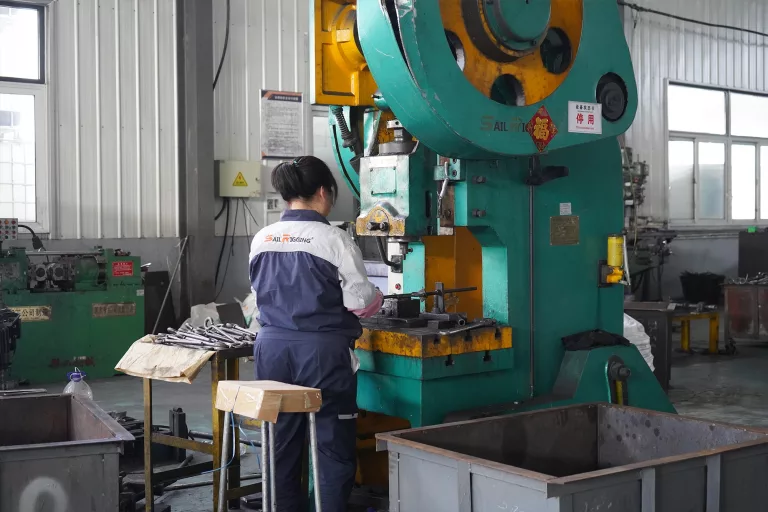
A welded eye bolt is a type of hardware where the eye, or loop, is securely welded to the bolt’s shaft, creating a strong and permanent connection. This design enhances the bolt’s load-bearing capacity and ensures reliable performance in heavy-duty applications. Welded eye bolts are commonly used in construction, manufacturing, marine, and transportation industries.
Features of Welded Eye Bolts
- Permanent Attachment: The welding process ensures a robust and durable connection, preventing the eye from loosening or detaching.
- High-Quality Materials: Typically made from high-strength materials such as stainless steel or alloy steel, providing excellent resistance to wear and corrosion.
- Customizable Options: Available in various sizes, thread types, and configurations to suit specific application requirements.
- Enhanced Load Capacity: The welded construction allows for better load distribution, minimizing the risk of bolt failure under heavy loads.
Advantage of Using Welded Eye Bolts
- Exceptional Strength: The welded joint provides superior strength, making these eye bolts ideal for demanding applications.
- Durability: Constructed from high-quality materials, welded eye bolts can withstand harsh environmental conditions and prolonged use.
- Versatility: Suitable for a wide range of applications, including lifting, securing, and anchoring.
- Safety and Compliance: Manufactured to meet stringent industry standards and safety regulations, ensuring reliable performance in critical operations.
Applications of Welded Eye Bolts
- Construction: Used for lifting and securing beams, columns, scaffolding, and heavy machinery.
- Marine: Essential for securing equipment, ropes, and chains on ships, docks, and offshore platforms.
- Manufacturing: Integral in machinery assembly, maintenance, and securing heavy components.
- Transportation: Used for securing cargo and equipment in trucks, trailers, and other transport vehicles.
Choosing the Right Welded Eye Bolt When selecting a welded eye bolt, consider the following factors:
- Load Capacity: Ensure the eye bolt can handle the intended load without compromising safety.
- Material: Choose the appropriate material for your application to ensure durability and resistance to corrosion.
- Size and Thread Type: Select the correct size and thread type to fit your specific requirements.
- Compliance: Verify that the eye bolt meets relevant industry standards and safety regulations. Installation and Maintenance Tips
- Proper Welding Techniques: Ensure the eye bolt is welded using proper techniques and equipment for a secure connection.
- Regular Inspections: Conduct periodic inspections to check for signs of wear, corrosion, or damage.
- Maintenance: Follow manufacturer guidelines for maintenance to ensure the longevity and performance of the eye bolt.
In a conclusion, welded eye bolts are a crucial component in various rigging and lifting applications, offering unparalleled strength and reliability. If you have any doubt about welded eye bolt, please feel free to contact Sail Rigging.