


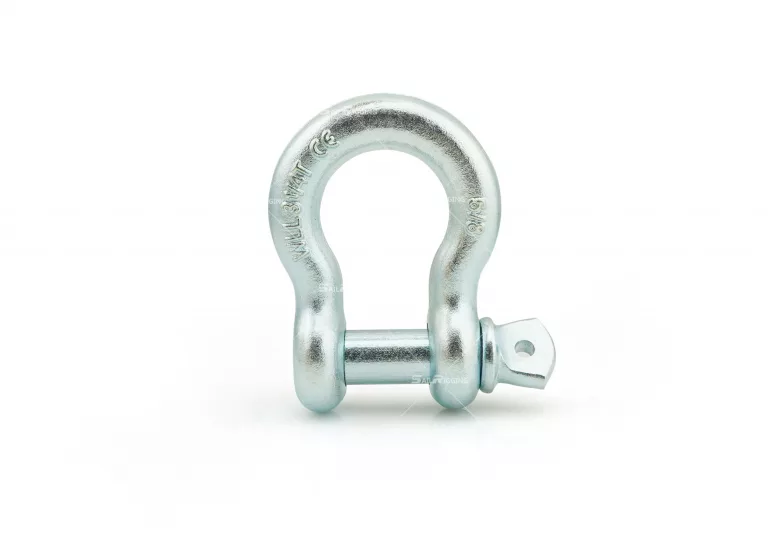
Shackles are essential tools in lifting, rigging, and towing, ensuring the safe and reliable connection of components. Choosing the right shackle need to consider many factors, but one of the most critical is selecting a shackle with a Working Load Limit (WLL) that matches or exceeds the weight of your load.
1. What Is Working Load Limit (WLL)?
The Working Load Limit (WLL) is the maximum load that a shackle can safely support during normal operations. It accounts for the material strength, design, and safety factors, ensuring that the shackle operates safely under specified loads.
Key Points About WLL:
- Exceeding the WLL can lead to equipment failureand dangerous accidents.
- The WLL is typically stamped on the shackle body for easy identification.
- Always consider the safety factorbuilt into the WLL, which varies but is commonly 4:1 or 5:1.
2. Steps to Choose the Right Shackle Based on Weight
Step 1: Determine the Weight of the Load
- Accurately measure or estimate the weight of the load you’ll be lifting, towing, or securing.
- Factor in any dynamic forces(e.g., shock loads, vibration) that might temporarily increase the load.
Step 2: Select a Shackle with a Suitable WLL
- Compare the load weight to the WLL of available shackles. The selected shackle’s WLL must equal or exceed the load weight.
- Example: If the load weighs 5 tons, use a shackle with a WLL of at least 5 tons.
Step 3: Account for Multiple Shackles or Sling Angles
- If multiple shackles are used to lift a load, the weight is distributed among them.
Example: A 10-ton load shared by two shackles requires each shackle to have a WLL of at least 5 tons. - For slings with an angle, adjust the WLL based on the angle factor. Steeper angles increase the load on each shackle.
3. Common WLL Ratings for Shackles
| Shackle Size (Diameter) | WLL (Approximate) |
| 1/2 inch | 2 tons |
| 3/4 inch | 4.75 tons |
| 1 inch | 8.5 tons |
| 1 1/4 inch | 12 tons |
| 1 1/2 inch | 17 tons |
These values can vary by shackle manufacturer and material, so always check the specific ratings on your shackle.
4. Safety Considerations
Never Overload a Shackle
- Overloading reduces the shackle’s lifespan and can cause sudden failure, leading to severe accidents.
Inspect the Shackle Before Use
- Check for signs of wear, deformation, cracks, or corrosion. A compromised shackle might not handle its full WLL.
Use Compatible Rigging Components
- Ensure the shackle’s pin, body, and attached components are compatible with the load and connection points.
Account for Environmental Factors
- For corrosive environments, use galvanizedor stainless steel shackles.
- For extreme temperatures, ensure the shackle material retains strength within the temperature range.
Conclusion
Selecting the right shackle starts with understanding the weight of your load and matching it to the shackle’s WLL. By carefully evaluating the load and ensuring the shackle meets or exceeds the required WLL, you can guarantee a safe and efficient operation. Always follow proper rigging practices, inspect equipment regularly, and prioritize safety when using shackles. If you don’t know how to choose right shackles, please feel free to contact Sail Rigging, we will provide profession suggestions for you.