


Folding vs. Standard Ratchet Load Binders: What’s the Difference?
Both tighten transport chains. The key difference is how the handle sits after use—and that can matter when you’re storing binders or working around a loaded trailer.
Quick answer: A folding handle ratchet load binder uses a handle that can fold down to reduce protrusion. A standard ratchet load binder has a conventional extended handle. Both rely on a ratcheting mechanism to tension a compatible transport chain. Neither style is automatically stronger; check each model’s working load limit (WLL), chain compatibility and configuration.
1. What Makes a Folding Handle Ratchet Binder Different?
On a flatbed, binders do not spend all their time in use. They are handled, checked and eventually stored with chains and other securement equipment. That’s where a folding handle can make a practical difference.
A folding handle ratchet binder operates through a ratchet and threaded components, much like a conventional model. Moving the handle back and forth adjusts the distance between the end fittings to tension or release the chain. On designs intended for it, the handle folds down after tensioning, reducing how far it projects.
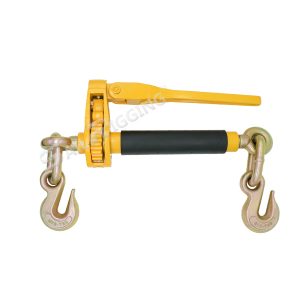
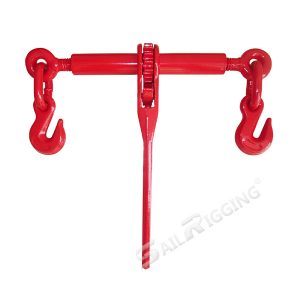
For a meaningful visual comparison, show each binder at the same scale. Ideally, add a second photograph of the folding model with the handle folded down.
2. Folding vs. Standard Ratchet Load Binder
Start with the operating differences rather than assuming one product is universally better.
| Feature | Folding Handle Binder | Standard Ratchet Binder |
|---|---|---|
| Handle design | Handle folds or pivots down | Conventional non-folding handle |
| Chain tensioning | Ratchet and threaded adjustment | Ratchet and threaded adjustment |
| Handle clearance | Reduced protrusion when folded | Extended handle requires clearance |
| Storage | Useful in crowded toolboxes and racks | Suitable when storage space is less restricted |
| WLL | Depends on the rated model | Depends on the rated model |
| Best reason to choose | Fold-down handle and compact organization | Familiar conventional handle design |
3. When Is a Folding Handle Worth Considering?
Less handle protrusion
When folded, the handle takes up less outward space in a toolbox or organized storage compartment.
Easier to pack with chains
For operators carrying several binders, a compact handle can make equipment arrangement more convenient.
Lower-profile handle position
On compatible designs, folding the handle down after tensioning can reduce interference with nearby equipment.
Familiar ratchet adjustment
The basic ratcheting tensioning method remains familiar to operators who already use standard ratchet binders.
4. Which Ratchet Load Binder Should You Choose?
Choose a folding handle design when storage clearance, handle protrusion or equipment organization is a priority. Choose a standard ratchet design when your fleet prefers its established setup and extra handle clearance is not an issue.
Before making either choice, confirm these specifications:
- Working Load Limit (WLL): Check the rating marked for the exact binder model, not only a catalog headline.
- Chain size and grade: Verify the chain dimensions, grade and approved compatibility of the chosen binder and hooks.
- End fittings: Confirm the supplied hook configuration suits the intended chain connection.
- Fit and adjustment: Review take-up range, available operating clearance and practical access to the handle.
- Condition and documentation: Inspect components before use and request appropriate specifications or test records from the manufacturer.
Example folding handle size options
| Nominal chain size range | Example WLL | Verify before ordering |
|---|---|---|
| 5/16–3/8 in. | 7,100 lb | Exact grade, hook fit and the model’s rating |
| 3/8–1/2 in. | 12,000 lb | Exact grade, hook fit and the model’s rating |
These are commonly published industry examples, not independent verification of Sail Rigging product certifications or current stock. Replace or confirm against the approved Sail Rigging product datasheet before publication.
5. What Should Importers Check with a Manufacturer?
For importers, distributors and cargo control brands, handle style is only one purchasing decision. Consistent dimensions, marking and documentation also matter when comparing supplier offers.
- Product dimensions: Confirm handle configuration, take-up, hook dimensions and chain fit.
- Ratings and identification: Request the applicable model WLL and product markings.
- Material and finish: Ask about forging, machining, heat treatment and coating details for the proposed product.
- Inspection evidence: Discuss dimensional checks and any performance testing or reports available for the supplied model.
- Order requirements: Confirm packaging, labeling and documentation needs for the destination market.
WSTDA T-6 provides industry guidance for load binders used with chain tiedowns. Any claim of conformance should be supported by documentation for the specific model.
6. Frequently Asked Questions
Is a folding handle ratchet binder stronger than a standard ratchet binder?
Not by definition. Strength and WLL depend on the specific product’s design, materials, dimensions and verified rating—not whether the handle folds.
Can a folding ratchet binder be used with Grade 70 chain?
Yes, if that binder model and its hooks are explicitly compatible with the intended Grade 70 chain size and the assembly is correctly rated. Check manufacturer instructions.
Can the handle remain folded during transport?
Follow the manufacturer instructions for the exact model. Where the design permits, folding the handle after tensioning can reduce protrusion. Ensure the binder remains correctly set and inspect the secured load as required.
What is the difference between WLL and breaking strength?
WLL is the rated allowable working load assigned to equipment under specified conditions. Breaking strength is a different performance measure and must not be used as a substitute for WLL when selecting cargo securement equipment.
What should I inspect before using a ratchet load binder?
Check hooks, threads, ratchet mechanism, handle and the folding pivot (if equipped). Look for deformation, cracks, excessive wear, corrosion or malfunction; remove damaged equipment from service and follow the manufacturer’s maintenance instructions.
Final Thoughts
If your main challenge is fitting several binders neatly into limited storage space, a folding handle can be a useful upgrade. If you have a conventional system that works well and handle clearance is not a concern, a standard ratchet binder remains a practical choice.
In either case, select the binder by its verified WLL, chain compatibility, hook design and intended working conditions—not handle appearance alone.
Need Ratchet Load Binders for Your Market?
Share your preferred chain size, target WLL, end fittings and order requirements. Sail Rigging can discuss suitable product configurations and available technical documentation.
Update this link to the site’s actual RFQ/contact form URL before publishing.
Industry References