
Welded-on D rings are essential components in numerous industries for securing, lifting, and anchoring tasks. They are renowned for their strength, durability, and versatility. This article will introduce you some important information about welded-on D rings, such as the shape, material, technology, surface, application, etc.
- What Are Welded-On D Rings?
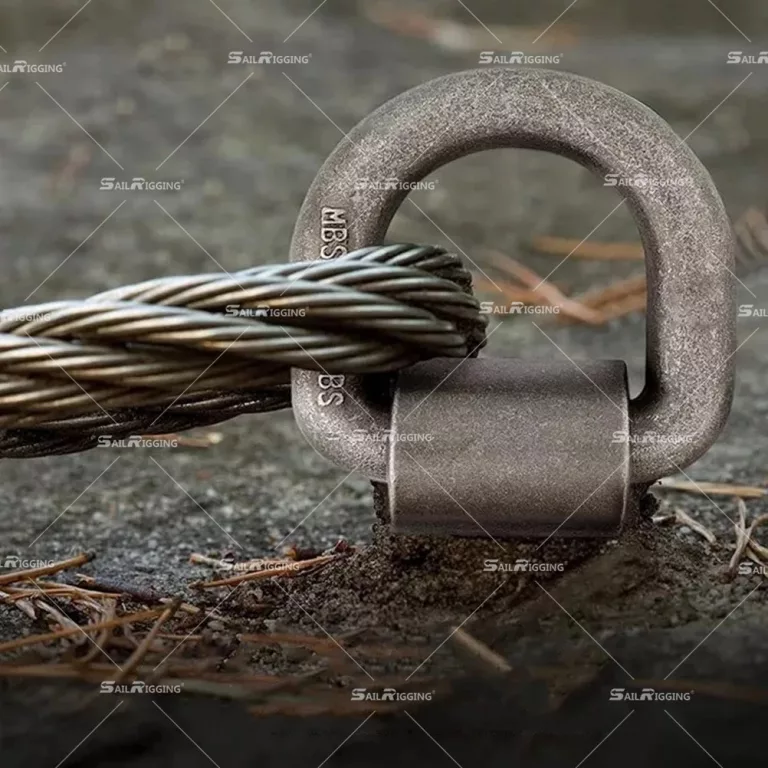
Welded-on D rings are metal rings shaped like the letter “D,” with a flat side specifically designed to be welded onto a surface. This flat base ensures a secure and permanent attachment, making the D ring a strong anchor point for heavy loads.
These components are primarily used to secure ropes, chains, straps, or hooks, offering stability and reliability in various load-handling applications. Their robust construction allows them to withstand significant stress, making them indispensable in transportation, construction, marine, and industrial operations.
- The Technical Parameter OfWelded-On D Rings
Welded-on D rings are carefully designed for strength, durability, and compatibility with specific tasks.
Material: There’re 2 common material of welded on d ring, carbon steel and alloy steel. Carbon Steel is commonly used for its affordability and high tensile strength, alloy Steel is ideal for heavy-duty applications due to enhanced durability.
Standard: Welded on d ring is produced by US Standard, specified by US standard material strength and performance.
Technology: Welded on d ring is drop forged, undergo tempering to enhance their strength and toughness.
Surface Finish: Self color with oil, galvanized, powder coating are common surface finish, self color with oil is a natural finish with a protective oil coating to resist rust during storage, zinc plated galvanized is providing excellent corrosion resistance, especially for outdoor or marine use, powder coating adds durability and an asethetic appeal while preventing rust.
Size: Welded-on D rings are available in various sizes to meet different load requirements. Common size attributes include: diameter influences the overall strength of the D ring, base width determines the area available for welding, opening zize ensures compatibility with straps, hooks, or ropes.
- Where to Use Welded-On D Rings
Welded-on D rings are incredibly versatile and find applications in numerous industries. Here are some of their most common uses:
- Flatbed Trucks
Welded on d rings provide secure anchor points for tie-downs, ensuring goods remain stable during transportation. It commonly used to secure heavy machinery, construction materials, or oversized loads.
- Trailers
Welded on d rings are used on utility, car-hauling, and enclosed trailers as tie-down points for securing loads. Multiple D rings allow for flexible configurations to accommodate various cargo shapes and sizes.
- Tie-Down Anchors in Warehouses
Welded on d rings are used as fixed anchor points on walls or floors to secure goods, pallets, or equipment. Welded on d rings prevents accidental shifting in high-traffic storage areas.
- Marine Vessels
Welded on d rings are used to secure equipment or cargo on boats and ships. Stainless steel or galvanized D rings are preferred for their resistance to saltwater corrosion.
- Construction Sites
Welded on d rings provide attachment points for cranes or hoisting equipment, they often used to lift heavy materials such as steel beams or pre-cast concrete.
- Towing and Recovery
Welded on d rings serve as anchor points for tow straps or chains in recovery operations. They are commonly found on off-road vehicles and tow trucks.
- Recreational Vehicles (RVs)
Welded on d ring are also used as anchor outdoor gear like bikes, kayaks, or camping equipment, ideal for securing loads on rugged terrain during outdoor adventures.
At last, welded-on D rings are versatile and indispensable tools in numerous industries. Their durable construction and reliable performance make them a trusted solution for securing, anchoring, and lifting tasks in transportation, marine, construction, and recreational applications. By understanding their design, materials, and applications, businesses can make informed decisions to ensure safety and efficiency in their operations. If you don’t know how to choose right welded on d rings or customized weld on d ring, please contact Sail Rigging right now, our production manager will provide you professional advice.