


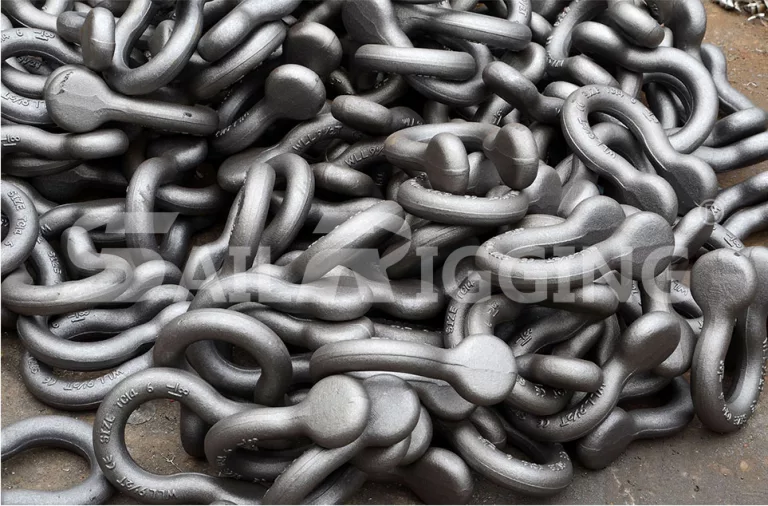
Anchor shackles, also called end shackles, are used to connected the anchor chain to the anchor. Anchor shackles play a crucial role in anchoring equipment and ensuring stability during operations involving heavy loads. Understanding what anchor shackles are and their uses can help improve safety and efficiency in lifting and rigging tasks. This is why we’ve written this article.
What Is an Anchor Shackle?
An anchor shackle is a type of shackle designed specifically for anchoring applications. It typically features a “D” or “bow” shape and includes a pin or bolt that secures the shackle’s two ends together. This design allows for the attachment of various rigging components, such as chains, ropes, and slings, to anchor points or other equipment.
Key Features:
- Shape: Anchor shackles generally come in two main shapes—D-shackles and bow shackles. D-shackles are ideal for straight-line pulls, while bow shackles offer a wider opening for multiple connections.
- Material: Made from high-strength steel, anchor shackles are engineered to handle substantial loads and resist harsh conditions.
- Pin: The pin or bolt in an anchor shackle can be secured with a cotter pin or threaded bolt, ensuring the shackle remains locked during use.
Uses of Anchor Shackles
Anchor shackles are versatile and used in a variety of applications, including:
1. Rigging and Lifting
In rigging systems, anchor shackles are used to connect components such as chains, cables, and lifting slings to anchor points. They provide a secure link that ensures stability and safety during lifting operations.
2. Securing Equipment
Anchor shackles are essential for securing equipment and machinery to fixed points. Whether it’s for securing a load on a trailer or anchoring a piece of equipment on a construction site, these shackles ensure that the equipment remains in place.
3. Marine and Offshore Applications
Due to their durability and resistance to corrosion, anchor shackles are commonly used in marine and offshore environments. They are used to anchor ships, secure mooring lines, and connect various marine rigging components.
Types of Anchor Shackles
- D-Shackles: These shackles have a narrow, “D” shape, making them ideal for applications where a straight-line pull is required. They are commonly used in lifting and securing tasks where space is limited.
- Bow Shackles: Featuring a wider, rounded shape, bow shackles can handle loads from various angles and allow for multiple connections. They are often used in situations where flexibility and a larger opening are needed.
Advantages of Anchor Shackles
- Strength: Anchor shackles are designed to handle high loads and provide reliable performance in demanding conditions.
- Versatility: They can be used in a wide range of applications, from construction and lifting to marine operations.
- Durability: Made from high-strength materials and often coated for corrosion resistance, anchor shackles are built to withstand harsh environments.
Anchor shackles are essential components in the rigging and lifting industry, offering strength, versatility, and durability. By understanding their features and applications, you can ensure that your rigging and securing operations are performed safely and effectively. Whether you’re involved in lifting, securing equipment, or working in marine environments, anchor shackles provide the reliability and performance needed for successful operations.If you have any question, don’t hesitate to contact Sail Rigging.