
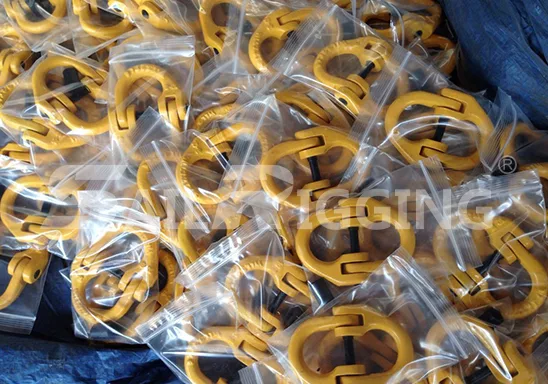
Connecting Link Harmmerlocks, we call Mechanical Coupling Links or connecting links, are common in the shop or an oblong ling hanging from a crane hook. If you’re new to rigging industry or haven’t used a master link before, you may be confused of specific and technical information. This is why we’ve written this article.
A connecting link harmmerlock is a type of connector used in lifting and rigging systems. It combines a master link—a strong, load-bearing link used to connect various rigging components—with a hammerlock mechanism. The hammerlock design features a pin or bolt that is hammered into place, locking the link securely and preventing accidental disengagement.
Key Features:
- Durability: Master links hammerlocks are typically made from high-strength steel, ensuring they can withstand significant loads and harsh operating conditions.
- Ease of Use: The hammerlock mechanism allows for quick and secure connections, which can be essential in dynamic lifting environments.
- Versatility: These links can be used with various rigging hardware, including chains, hooks, and slings.
Uses of Connecting Links Hammerlocks
Connecting links hammerlocks are employed in a range of applications, primarily focused on lifting and securing heavy loads. They are often used in following fields.
1. Connecting Rigging Components
In a rigging system, master links hammerlocks are used to connect different elements, such as chains, hooks, and slings. They serve as a central point in the rigging assembly, distributing the load evenly and providing a secure connection.
2. Load Securing
Master links hammerlocks are essential for securing loads during lifting and transportation. Their robust construction ensures that they can handle high loads without risk of failure, making them ideal for use in construction, shipping, and industrial applications.
3. Safety and Compliance
Using master links hammerlocks contributes to safety and compliance with industry standards. The secure locking mechanism minimizes the risk of accidental disconnection, which is crucial for maintaining safety during lifting operations.
Advantages of Connecting Link Hammerlocks
- High Load Capacity: Designed to handle heavy loads, master links hammerlocks are ideal for demanding rigging applications.
- Secure Connection: The hammerlock mechanism provides a secure and stable connection, reducing the risk of accidental detachment.
- Ease of Maintenance: These components are generally easy to inspect and maintain, ensuring that they remain in good working condition.
Connecting Link Hammerlocks are a vital component in the rigging and lifting industry, offering durability, security, and ease of use. By understanding their role and applications, you can ensure that your rigging operations are performed safely and effectively. Whether you’re connecting rigging components, securing loads, or ensuring compliance with safety standards, master links hammerlocks provide the reliability and performance needed for successful lifting operations. If you have any question, please feel free to contact Sail Rigging.