


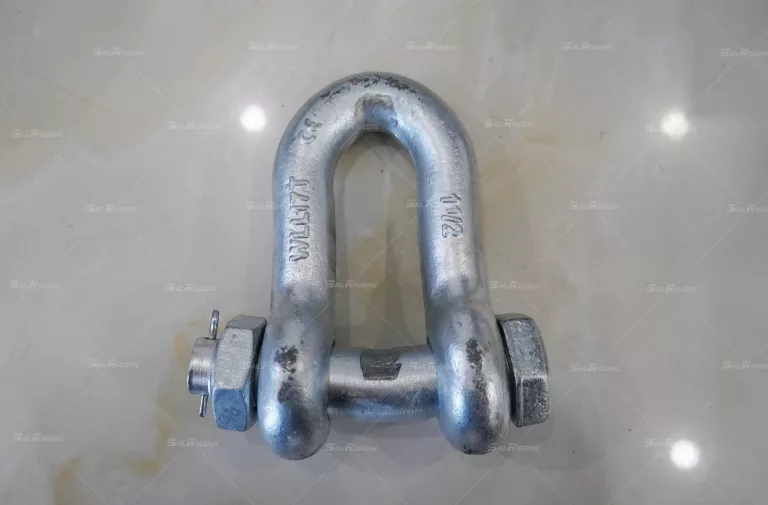
Tensile deformation of shackles refers to the changes in shape and dimensions that occur when a shackle is subjected to tensile (pulling) forces. Shackles, commonly used in rigging, lifting, and maritime applications, are designed to withstand substantial loads. However, when they are subjected to excessive tensile forces, they may experience elongation or stretching, which is known as tensile deformation.
Tensile Test is very important for shackles, today we are sharing more information about tensile deformation. Tensile deformation of shackles refers to the changes in shape and dimensions that occur when a shackle is subjected to tensile (pulling) forces. Shackles, commonly used in rigging, lifting, and maritime applications, are designed to withstand substantial loads. However, when they are subjected to excessive tensile forces, they may experience elongation or stretching, which is known as tensile deformation. So it’s very necessary for us to test shackles deformation load limit.
Usually we will see Visual Indicators of Deformation, such as elongation, bending, and distortion, it means it has reach deformation load limit.
After testing, we need to discuss how to interpret the data obtained from tensile deformation tests, including measures like elongation and ultimate tensile strength. Provide insights into evaluating test results against industry standards and specifications.Explain the concept of maximum load in tensile deformation testing and its implications for shackle performance. Discuss methods for determining the maximum load of deformation tensile based on safety factors and design considerations.
Tensile deformation testing plays vital role in ensuring the safety and reliability of shackles, so we need to observe during tensile deformation testing, such as equipment setup and personal protective gear. Also stress the importance of adherence to safety protocols to mitigate risks of accidents or injuries. If you have deformation tensile problems, please feel free to contact Sail Rigging.