


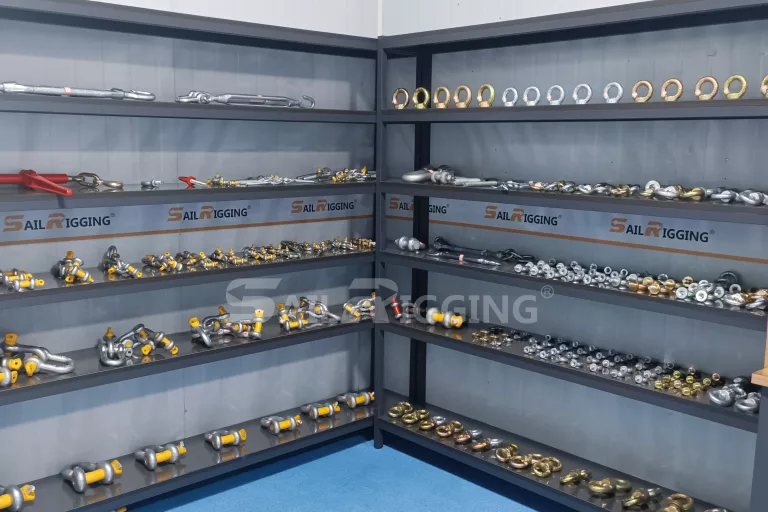
In industries where safety and reliability are paramount, such as rigging and lifting operations, the quality of components like shackles cannot be compromised. Effective quality control measures are essential to ensure that shackles meet rigorous standards and performance requirements. Sail Rigging strictly control quality of every batch product, inspecting and test before shipment. In this article, we will explore the key steps involved in controlling shackle quality, from raw material selection to inspection and testing before shipment.
- Raw Material Selection:
The foundation of high-quality shackles lies in the selection of premium raw materials. Manufacturers must carefully source materials such as carbon steel, alloy steel, or stainless steel from reputable suppliers. These materials should meet specified standards for strength, durability, and corrosion resistance. By partnering with trusted suppliers and conducting thorough material assessments, manufacturers can ensure the integrity and reliability of their shackles from the outset.
2.Inspection of Raw Materials:
Once the raw materials are received, they undergo rigorous inspection to verify their quality and suitability for use in shackle production. This inspection may include visual checks for defects, dimensional measurements to ensure compliance with specifications, and material testing to assess mechanical properties. Any materials that fail to meet the required standards are promptly rejected or returned to the supplier, ensuring that only the highest-quality materials are used in shackle manufacturing.
- Manufacturing Process Control:
During the manufacturing process, stringent quality control measures are implemented to maintain consistency and precision in shackle production. This includes monitoring key process parameters such as temperature, pressure, and speed to ensure uniformity and adherence to specifications. Skilled technicians oversee each step of the manufacturing process, conducting regular inspections and adjustments as needed to uphold quality standards.
- In-Process Inspection:
Throughout the manufacturing process, shackle components undergo continuous inspection to identify any defects or deviations from the required specifications. This may involve visual inspections, dimensional checks, and non-destructive testing methods such as magnetic particle inspection or ultrasonic testing. Any issues detected during in-process inspection are addressed immediately to prevent further manufacturing of defective components.
- Final Inspection and Testing:
Before shipment, each shackle undergoes a comprehensive final inspection and testing process to ensure its quality and performance. This includes visual examination for surface defects, dimensional verification to ensure proper fit and function, and mechanical testing to assess strength and load capacity. Additionally, shackles may undergo specialized tests such as proof load testing or fatigue testing to validate their performance under real-world conditions.
Effective quality control measures are essential to ensuring the reliability and safety of shackles used in rigging and lifting applications. By implementing rigorous inspection and testing procedures throughout the manufacturing process, manufacturers can maintain the highest standards of quality and performance in their products. By prioritizing quality control, stakeholders can have confidence in the integrity and reliability of shackles, ultimately contributing to safer and more efficient operations in various industries. If you want to know more about how to control shackle’s quality, please get it touch with Sail Rigging right now.sha