
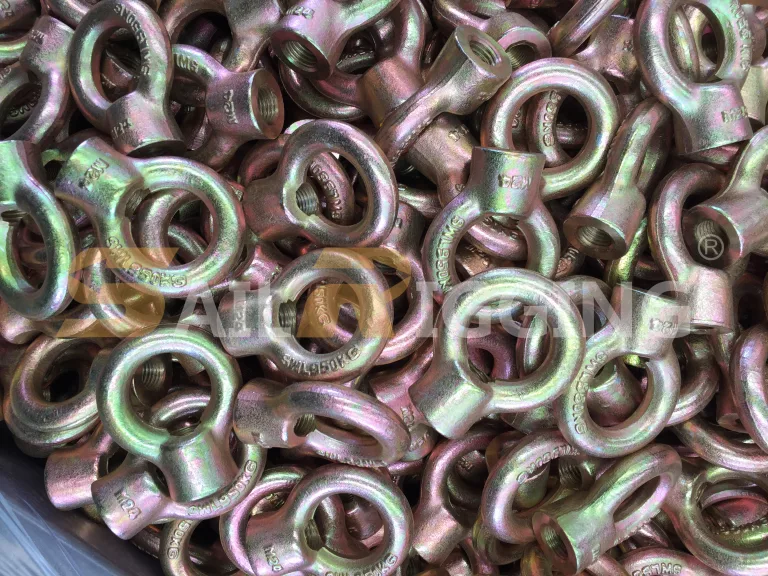
Eye bolts and eye nuts are common in rigging and lifting industries, they may sem similar at first glance, but they serve different purposes and have distinct difference. Today we will take you to explore the differences between an eye bolt and an eye nut, helping you to choose the right one for your needs.
What is an Eye Bolt?
An eye bolt (DIN580 eye bolt, JIS1168 eye bolt etc)is a type of fastener with a looped end, or “eye,” that can be used for various rigging, lifting, and anchoring applications. The key features of an eye bolt include:
- Structure:An eye bolt consists of a threaded shaft with a looped head. The threaded part is screwed into a structure or secured with a nut.
- Material:Eye bolts are typically made from steel, stainless steel, or other durable metals to withstand heavy loads and harsh environments.
- Applications:Eye bolts are used for lifting, securing loads, or as anchor points. They are commonly found in construction, marine, and industrial settings.
What is an Eye Nut?
An eye nut(DIN582 eye nut, JIS1169 eye bolt, etc), is a nut with a looped head, similar to an eye bolt but without the long threaded shaft. Key characteristics of an eye nut include:
- Structure:An eye nut features a looped head attached to a threaded hole. It is designed to be screwed onto a bolt or threaded rod.
- Material:Like eye bolts, eye nuts are often made from steel, stainless steel, or other strong metals to ensure reliability and strength.
- Applications:Eye nuts are used in conjunction with bolts or threaded rods to create lifting points, anchor points, or secure loads. They are also utilized in various industrial, construction, and marine applications.
In a conclusion, they are different in design and structure, installation, application and load load capacity. Eye bolt, have a threaded shaft and a looped head, can be directly screwed into a material or secured with a nut, suitable for direct attachment to structures, often used where a permanent or semi-permanent lifting point is needed. But eye nut consists of a looped head with a threaded hole, requires a bolt or threaded rod for attachment, especially used where a removable lifting point is required. Both eye bolts and eye nuts are designed to handle significant loads, but their load capacity can vary based on the material, size, and design. Always consult manufacturer specifications to ensure safe usage.
Choosing the Right Component
Selecting the right component depends on your specific application and requirements:
- Eye Bolts:Ideal for applications where the lifting or anchoring point needs to be fixed to a structure.
- Eye Nuts:Perfect for situations where the lifting point needs to be attached to an existing bolt or threaded rod, offering more flexibility.
Understanding their differences and applications will help you make informed decisions for your projects, ensuring safety and efficiency. Always ensure that the components you choose meet the necessary standards and specifications for your specific application. If you want to know more about lifting and rigging eye bolt/ eye nut, Just feel free to contact Sail Rigging. We will be glad at service.