
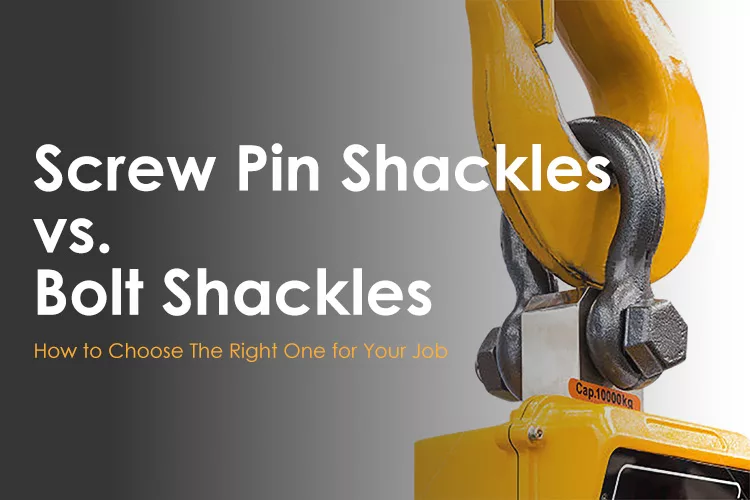
Screw Pin Shackles vs. Bolt Shackles: How to Choose the Right One for Your Job
In rigging operations, shackles are indispensable tools for completing various suspension and support projects, enabling quick and temporary connection and disconnection. A key component is the shackle bolt, and different shackle bolts are suitable for different tasks. Choosing the correct pin shackle ensures efficient and safe operation. Choosing the wrong pin shackle will seriously affect the work results and create safety hazards. Therefore, it is essential to select the appropriate shackle type based on the specific application. Today, we will discuss two common pin types: threaded pin shackles and bolt shackles, and help you choose the right shackle bolt for your needs.
What Is A Shackle?
Shackles are important connector for rigging and lifting projects to enable quick and temporary connection and disconnection. A pin is a key component of a shackle, different pins are suitable for different applications. If you choose the correct pin shackle, it will ensure efficient and safe operation. Or will seriously affect the work results, cause safety hazards. Therefore, it is essential to select the appropriate shackle type according to specific applications. Today, we will discuss two common pin types: threaded pin shackles and bolt shackles, and help you choose the right shackle bolt for your needs.
What Is A Screw Pin Shackle?
A screw pin shackle has a threaded pin that passes through one lug of the shackle and screws into the other. When properly tightened, the threads of a screw pin shackle are fully engaged, firmly gripping the lug of the shackle, while the shoulder of the shackle is tightly connected to the shackle body. Therefore, screw pin shackle could connect more securely and durable.
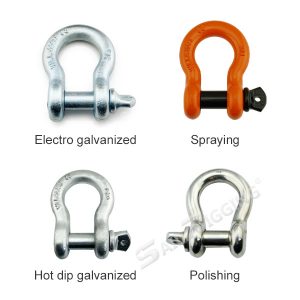
The advantage of this pin-type shackle is its ease of quick and easy connection and disassembly in rigging operations. Compared to other pin shackle, screw pin shackles offer the fastest connection and disassembly speeds,ideal for temporary rigging operations.
What Is A Bolt Type Shackle?
Bolt type shackles, also known as safety shackles, consist of a threadless pin, a nut, and a cotter pin for secondary locking. The shackle is secured by a combination of bolts and nuts, with the cotter pin at the end providing extra safety for rigging operations. The boltless pin eliminates the need to screw the pin into the other lug. Bolt type shackles offer a wider range of specifications and can withstand higher loads than threaded pin shackles. The size of bolt type shackle is 3/16inch to 4inch, the working load limit (WLL) is 1/3 t to 150t.
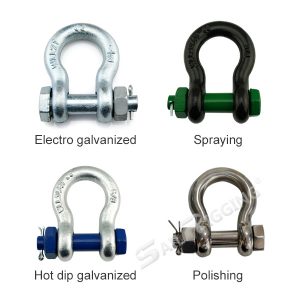
Bolt type shackles provide more durable safety and are ideal for extended use. When the load may shift, vibrate, or rotate on the pin, other types shackles may fail or loosen. But bolt type shackles could finish work well, maintain a proper connection, preventing the pin from loosening.
Read: A Comprehensive Guide To The Different Type Of Shackles
Which Shackle Is Right for Your Job?
When choose screw pin shackle or bolt type shackle ,we need to consider the following factors.Both screw pin shackles and bolt type shackles have their advantages, could fit different applications.
1.Safety
Safety is the primary factor in rigging operations. Shackles must remain securely fastened throughout the entire operation, without breaking or falling off. Both pin-type shackles and bolt-type shackles can handle most rigging operations within normal working load ranges. However, bolt-type shackles are safer than screw-type shackles, and the cotter pins securing the bolts provide an extra layer of safety.
Read: Why Working Load Limit is so important?
2.Durability
Durability means the lifespan of the shackle, if temporary or permanent applications. Screw type shackles are suitable for temporary use, could allowing for easy disassembly, frequent adjustments, and tightening of the screws. The threads on the pins of screw type shackles are fully engaged. However, over time, the pins gradually loosen after each use. Bolt type shackles, on the other hand, are special for permanent use, requiring no adjustments. Once secured by cotter pins and bolts, they will be long lifttime than screw type shackles.
3. Application Type
Different application scenarios require different shackles. While both screw shackles and bolt shackles can be used for rigging, binding, towing, and suspension applications, one type is superior in certain scenarios. For example, in temporary applications such as binding, towing, and material handling, screw shackles offer quick release and easy disassembly. In sling, sunshade sail, and steel structure work, bolt shackles are required for permanent securing and suspending of wire ropes.
Conclusion
Choosing the appropriate pin shackle is crucial for rigging operations. Sail Rigging offers a variety of sizes and models of threaded pin shackles, including galvanized and stainless steel options. Choose screw shackles for temporary or quick operations. Choose bolt shackles for long-term, high-safety, or load-bearing applications. Always choose bolt shackles for structural lifting point operations. Regardless of the type of pin shackle chosen, always operate within the working load limits. If you have further questions about shackles, contact Sail Rigging for more information.