


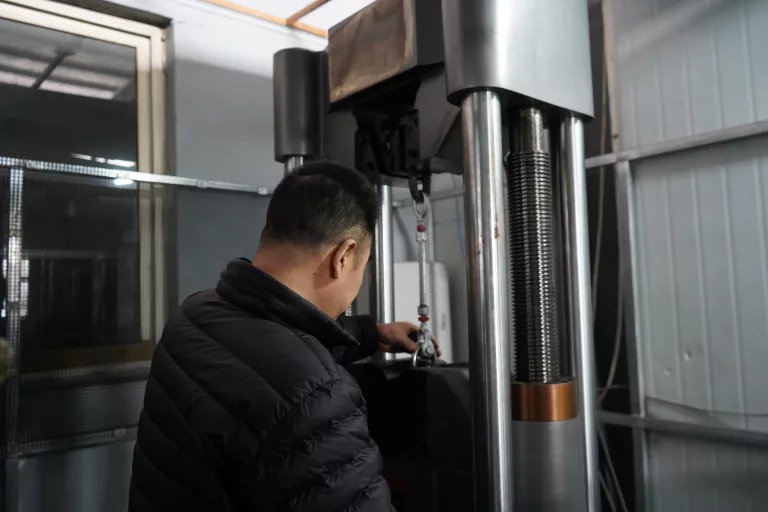
Turnbuckles are mechanical devices used to adjust the tension or length in ropes, cables, or tie rods. They are commonly used in various applications such as construction, shipbuilding, rigging, and suspension systems. Given their role in bearing loads and maintaining tension, it’s crucial to ensure their reliability and performance under different conditions. Tensile testing is one of the methods used to evaluate the strength and integrity of turnbuckles. Here’s the reason why need to do tensile test?
1.Safety Assurance: Turnbuckles are often used in applications where they are subjected to significant loads and tension. Ensuring that they can withstand these loads without failure is critical for the safety of people and property. Testing the breaking strength helps identify any weaknesses or defects in the turnbuckle that could lead to catastrophic failure during use.
2.Compliance with Standards: Many industries have standards and regulations governing the use of turnbuckles and other hardware. These standards (DIN1480 turnbuckle, DIN1478 Turnbuckle, US Type Turnbuckle)often specify minimum breaking strength requirements that turnbuckles must meet to be considered safe for use. Testing the breaking strength allows manufacturers to ensure that their turnbuckles comply with these standards and regulations.
3.Quality Control: Conducting breaking strength tests as part of the manufacturing process helps ensure that turnbuckles meet quality standards and specifications. By testing a sample of turnbuckles from each production run, manufacturers can identify any manufacturing defects or inconsistencies that could affect the strength and integrity of the product.
4.Product Performance: Understanding the breaking strength of turnbuckles allows engineers and designers to accurately assess their performance in real-world applications. This information is essential for determining the appropriate size and type of turnbuckle to use in a given application and for ensuring the safety and reliability of the overall system.
5.Liability Mitigation: In the event of an accident or failure involving a turnbuckle, having documentation of breaking strength tests can help manufacturers demonstrate that they took reasonable steps to ensure the safety and quality of their products. This can be important for mitigating liability and protecting against legal claims.
In a summary, testing the breaking strength of turnbuckles is an important part of ensuring their safety, quality, and reliability in various applications. By conducting these tests, manufacturers can identify and address potential issues before turnbuckles are put into service, helping to prevent accidents and ensure the long-term performance of the products. If you want to know more about breaking strength or tensile test, please feel free to contact Sail Rigging.