


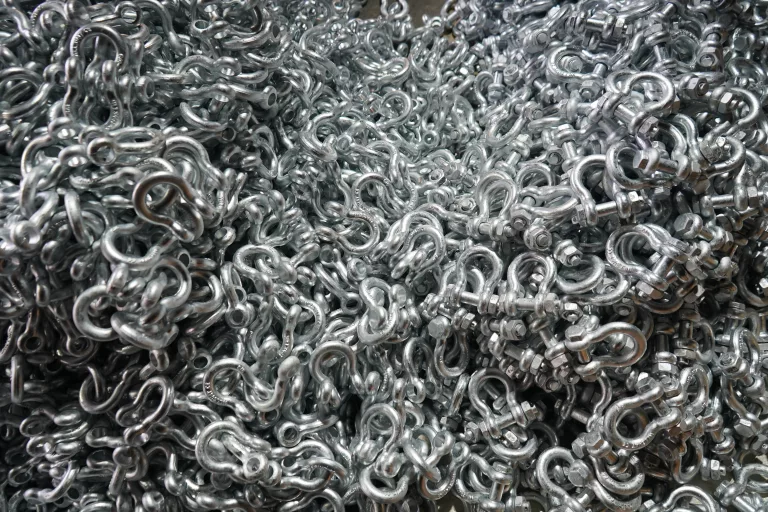
Working Load Limit is the maximum load , a shackle designed to handle under normal working conditions while maintaining a safety factor. Working Load Limit of Emphasize the need for understanding the Working Load Limit (WLL) to ensure safety and prevent accidents. ASME B30.26 rigging hardware requires shackle manufacturers to have identification and/or markings on the shackle body. These markings are required to be maintained and legible throughout the service life of the shackle. You should be able to read on every shackle body the rated load, the size, grade, material type, or load rating, CE, etc. And always check the working load limit and make sure your load never exceeds that limit.
Factors Influencing WLL:
Discuss the various factors that can affect the WLL of shackles, including material strength, design, and manufacturing standards. Emphasize the importance of adhering to industry standards and specifications. Briefly describe the common types of shackles, such as screw pin shackles, bolt-type shackles, and round pin shackles.
Calculation of WLL:
Explain the basic formula for calculating the WLL of a shackle. Discuss the role of safety factors in these calculations and how they account for uncertainties in real-world applications.
Industry Standards and Regulations:
Highlight the importance of adhering to industry standards and regulations when selecting and using shackles. Mention organizations such as ASME (American Society of Mechanical Engineers) and their guidelines for safe use.
Markings and Identification:
Explain the significance of markings on shackles, such as WLL, size, and manufacturer information. Guide readers on how to interpret these markings and emphasize the need to choose shackles with clear and legible markings.
Proper Inspection and Maintenance:
Discuss the critical role of regular inspection and maintenance in ensuring the continued safety and reliability of shackles. Provide guidelines on what to look for during inspections and when to retire a shackle from service.
Real-world Examples and Case Studies:
Include real-world examples or case studies that illustrate the consequences of neglecting WLL considerations or using shackles improperly. Use these examples to emphasize the importance of safety.
Conclusion:
Summarize the key points discussed in the article, reinforcing the critical role of understanding and adhering to the Working Load Limit of shackles for a safe and efficient working environment. So we should pay attention to working load limit when choosing shackles. If you want to know more about working load limit, please feel free to contact Sail Rigging.