


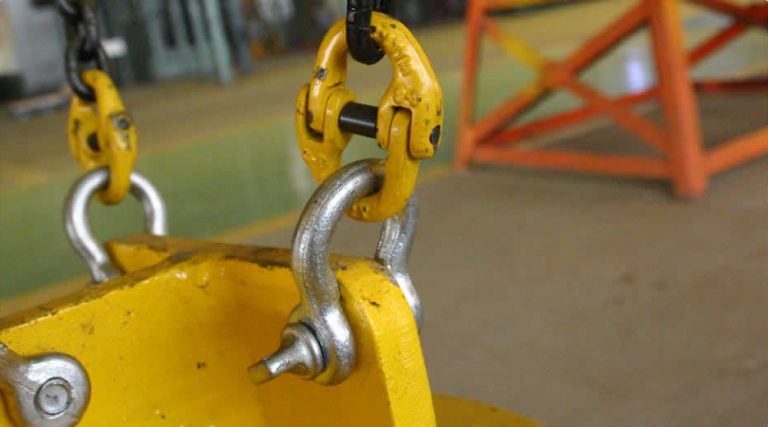
Nowadays, plenty of manufacturers are producing and selling shackles, quite convenient for users in selection, but also brings negative effect to the industry standard and the quality. Then comes the question. How can we pick up good quality shackles?
First of all, look at the surface. No matter what kind of standard shackles, general surface treatment is Galvanizing (hot dip galvanized and electro galvanizing), Dacromet plating, and Zinc coating. Main purpose of this is to prevent the oxidation of the surface, so as to prevent corrosion and rust. Good quality shackles are often processed through electroplating, making the product look very delicate and smooth.
Second, material need your attention. High strength shackles are made on the basis of loading capacity, performance, and environmental applications. These factors are mainly determined by the raw materials, select the different types of materials for your applications, high tensile carbon steel, and alloy steel shackles can be used in highly loading limited, fatigues or some extreme conditions. Stainless steel shackles are ideal for yacht rigging, decking, and architectural applications, read and check Sail Rigging Catalogue or more about rigging accessories of different materials.
Third, sometimes stated as Safe Working Load (SWL), or is the maximum safe force that rigging accessories can exert to lift, suspend, or lower, a given mass without fear of breaking. Usually marked on the body by the manufacturer. Our rigging accessories’ safety factor can be as high as 10:1 or 10 to 1, if you have more high-quality rigging to your lifting equipment, contact us for more knowledge of M.B.S & W.L.L.
Finally, selecting the high strength shackles for your critical and intensive lifting and rigging applications is very important. Most rigging shackles look fine when they are ready to use, but the true test is how they will hold up in the futures, so it’s very important to pick up good quality shackles.