



Chain for Cargo Securement: You Need to Know
Are you anxious about cargo scattered all over the road? Are you worried about cargo teetering on the edge? Are you uneasy about heavy equipment rolling back and forth on a flatbed truck?…These can all lead to extremely serious accidents: cargo falling and being damaged, failing to arrive safely, carriers and drivers not receiving payment, and even personal injury. Ultimately, it’s because you haven’t properly secured your cargo.
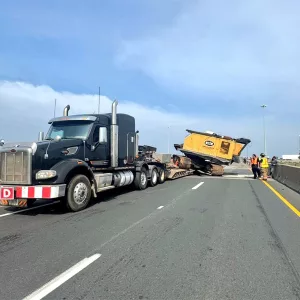
Cargo securing is not only about safety but also about business interests. Therefore, choosing the right securing equipment on trucks or trailers and properly loading, positioning, and securing cargo are crucial to preventing accidents during transport. Chains are a commonly used device for securing cargo. Today, we’ll introduce important knowledge about chains, including chain grade differences, technical parameters, and how to choose the right chain specifications and quantity, hoping to give you peace of mind when securing your cargo.
Chain Common Method For Cargo Securement
Chain grade plays a crucial role in determining the strength and quality of the steel used to manufacture the chain. Chain grade indicates its ability to withstand heavy loads and harsh environments. The most common chain grades used for securing cargo include Grade 43 (high strength), Grade 70 (transport grade), Grade 80 (alloy grade), and Grade 100 (high-grade alloy grade). Each grade has its unique characteristics; the higher the grade, the greater the strength-to-weight ratio. For easy identification, G70 transport chains are embossed with “7” or “70,” and G80 lifting chains are embossed with “8” or “80,” and have a yellow chromate coating.
Difference For Different Grade Chains
Understanding the differences between different chain grades is crucial for choosing the right chain. The advantages of chains lie in their durability and strength. Their main disadvantages are their weight and the potential for physical damage to cargo. Steel chains are graded according to industry standards based on their intended use (e.g., securing or lifting cargo). Grades 30 and 43 are general-purpose chains, Grade 70 is a transport chain, and Grades 80 and 100 are lifting chains. The higher the grade, the greater the chain strength and the less bending.
Grade 30 high-strength coil chains are an affordable, low-carbon option widely used in agriculture and general industry.
Grade 43 high-strength chains offer abrasion resistance and high tensile strength, suitable for trucking, agriculture, and construction.
Grade 70 transport chains are lighter but 20% stronger than comparable Grade 43 products. Grade 70 chains are commonly used for securing transported goods.
Grade 80 and 100 alloy chains are designed for lifting goods such as rocks, tree balls, and engines. They can also be used as tie-down straps, but are more expensive than other chains. The Occupational Safety and Health Administration (OSHA) (29 CFR 1926.251) requires chains used for lifting to have permanent, durable markings indicating size, grade, load capacity, and manufacturer.
Specification of Chains
The diameter of a chain refers to the thickness of its links. The working load limit of a chain is determined by its grade and diameter, as shown in the table below.
| Chain Link Diameter | Working Load Limit ( Pounds) | ||||
| (Inches) | Grade 30 | Grade 43 | Grade 70 | Grade 80 | Grade 100 |
| 1/4 | 1300 | 2600 | 3150 | 3500 | 4300 |
| 5/16 | 1900 | 3900 | 47000 | 4500 | 5700 |
| 3/8 | 2650 | 5400 | 6600 | 7100 | 8800 |
| 7/16 | 3700 | 7200 | 8750 | – | – |
| 1/2 | 4500 | 9200 | 11300 | 12000 | 15000 |
| 5/8 | 6900 | 13000 | 15800 | 18100 | 22600 |
How to Choose the Right Chains
Determining the appropriate chain size requires a comprehensive understanding of the cargo’s characteristics and required working load limits. The total working load (WLL) required for safe transport on a flatbed trailer is equal to half the total weight of the cargo. This means that the total working load limit of all chains used must exceed 50% of the cargo’s total weight. For example, a 40,000-pound load must be secured with chains having a working load capacity of at least 20,000 pounds.
Additionally, according to federal regulations, the minimum number of tethers required depends on the length and weight of the cargo.
■ Considering cargo length, cargo 5 feet or less requires at least one tether, while cargo between 5 and 10 feet requires at least two tethers.
■ Depending on weight requirements, any item weighing over 1100 pounds requires at least two tethers.
■ Vehicles and machinery weighing over 10,000 pounds have special requirements, requiring at least four tethers to secure the four corners.
Proper Inspection and Maintenance
Routine Inspection
Before each use, inspect the chain, connections, and end hardware for any visible damage or wear. Replace the chain immediately if any of the following issues are found:
Visible Damage: Inspect the chain for any visible signs of damage, such as cracks, bends, or chips. Visible damage indicates that the chain is overloaded or has been subjected to excessive stress or wear.
Wear: Over time, chains wear and lose strength. Inspect for signs of wear, such as elongation or stretching, and check that the links still maintain their correct shape and are not deformed.
Rust: Inspect the chain for signs of rust and ensure that the links are smooth and free of pits. Rust weakens the chain, making it more prone to breakage.
Compliance with Standards: Chains used for binding and securing cargo must meet relevant standards. For example, Australian chains must comply with AS/NZS 4344:2001, and American chains must comply with ASTM/NASM96, etc. If the chain does not meet these standards, it should be replaced.
Age: While chains don’t have a fixed lifespan, they should be replaced regardless of their age if signs of wear, damage, or corrosion appear.
Regular Maintenance
Regularly inspect the chain for these problems. If any are found, replace it immediately. Even if no problems are found, regular maintenance, proper storage, cleaning, and lubrication of moving parts will extend its lifespan and ensure reliable operation.
Conclusion
Chains are commonly used in cargo securing operations and are crucial for cargo transportation and road safety. If you are looking for a suitable transport chain supplier or want to replace your transport chains, please feel free to contact Sail Rigging. Sail Rigging offers chains of various grades and sizes to meet your diverse transportation needs.