

What Is the WLL Of Load Binders? How To Calculate WLL Of Load Binders?
When transporting heavy equipment and cargo, tie down equipment is essential to ensure safe transport. Load binders are a critical component in lifting, used to secure cargo, tighten tie down chains, and prevent shifting during transport.
Are you using the correct size load binder for your heavy-duty application? Using the wrong size chain binder can lead to hazardous situations and potential cargo damage. What is the working load limit of chain load binders? How Much WLL Of load binders? How to calculate WLL of load binders? Today, we’ll share some knowledge about the working tensile strength of load binders to help you choose the right load binders.
What Is WLL of load binders?
The working load limit (WLL) of load binder is the maximum load it is designed to withstand under normal use. Its working load limit varies depending on its size, class, and type. Common chain load binder types include: 5/16-inch to 3/8-inch Grade 70 Ratchet load binder with a WLL of 5,400 lbs, and 1/2-inch to 5/8-inch ratchet load binder with a WLL of 13,000 lbs. The WLL, engraved on the load binder, is its maximum load capacity, and the WLL of the entire binding system is limited by the component with the lowest WLL.
WLL of Load binder by Size and Class
5/16-inch to 3/8-inch (Grade 70): Typically WLL is 5,400 lbs, but heavy-duty versions can reach 8,800 lbs.
3/8-inch to 1/2-inch (Grade 70): Common working load (WLL) is 9,200 lbs, but some models have a rated load of up to 13,000 lbs.
1/2 inch (Grade 70): Typical working load (WLL) is 13,000 lbs.
| Size | US Type Ratchet Load Binder | US Type Lever Load Binder | US Type Recoiless Load Binder |
| Picture | 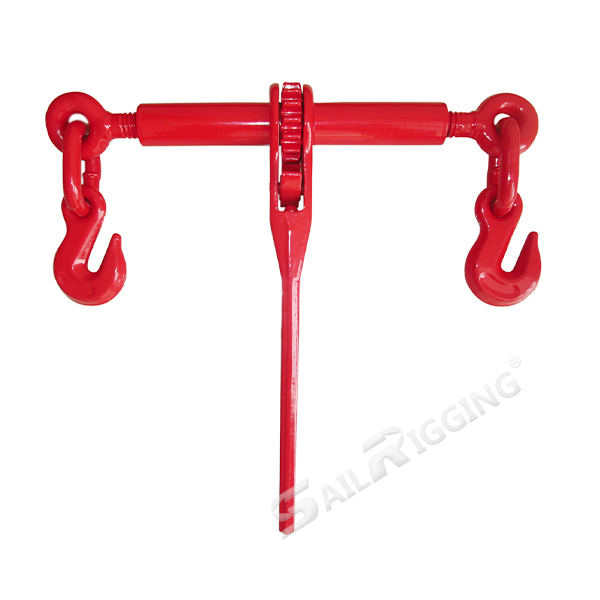 |
|
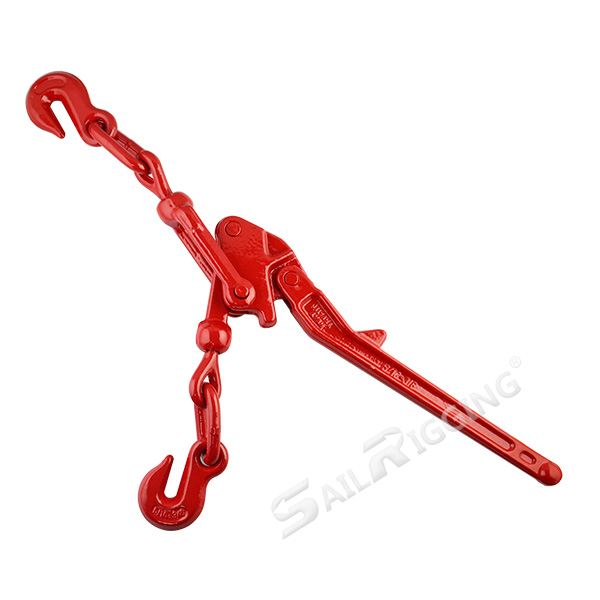 |
| 1/4-5/16 | 2600lbs | 2600lbs | ……. |
| 5/16-3/8 | 5400lbs
6600lbs 7400lbs 8800lbs |
5400lbs | 5400lbs |
| 3/8-1/2 | 9200lbs | 9200lbs | ……. |
| 1/2-5/8 | 13000lbs | 13000lbs | ……. |
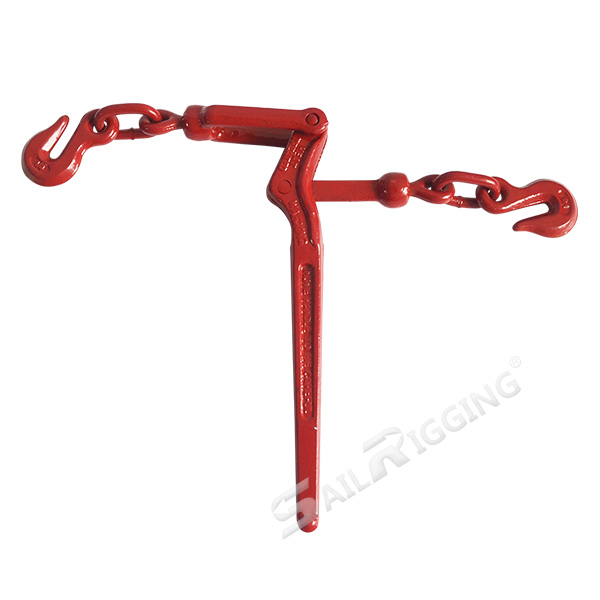
Precautions for Selecting Cables
1. Check the markings. Always check the working load (WLL) marked on the cable tie itself. The working load limit of the cable tie must match the chain’s rating.
2. Consider the entire system: The working load (WLL) of the sling depends on the component with the lowest rated load, whether it’s the chain, the binding, or the hook.
3. Use the correct grade: The binding’s rated load must match the chain’s grade and size. For example, a 3/8-inch Grade 70 chain requires a sling with a rated tensile strength of at least 9200 lbs to avoid an insufficiently low binding grade.
4. Follow proper usage instructions: Ensure the sling is securely fastened to prevent it from coming loose during transport and creating a safety hazard.
5. When selecting the type of sling, consider factors such as frequency of use, operator experience, load characteristics, and safety requirements. Ratchet slings are safer and easier to operate, while lever slings offer quicker operation.
Types Of Load Binder
Chain binders (also called load binders, binders) are essential for tightening chains around cargo, preventing chain shifting during transport. They are necessary tensioning devices that firmly secure the chain around the cargo. Chain binders are mainly divided into two types: ratchet load binder and lever load binder. Each type has its advantages in different applications.
Ratchet Load Binder
Ratchet load binders use a ratchet mechanism, requiring only a small amount of force to gradually tighten the chain, making them generally safer and easier to operate.
The main advantage of ratchet load binder is the reduced risk of rebound injuries, as they do not store energy in the handle like lever fasteners.
Lever Load Binder
Level load binders are quick to operate and usually have fewer moving parts, but require more force to operate and are more likely to cause injury if used improperly.
Regardless of the type you choose, please maks sure that your cargo sling size matches the chain diameter and that its working load limit matches the chain’s rating. Cargo and personnel safety paramount.
How to Calculate WLL Of Load Binders?
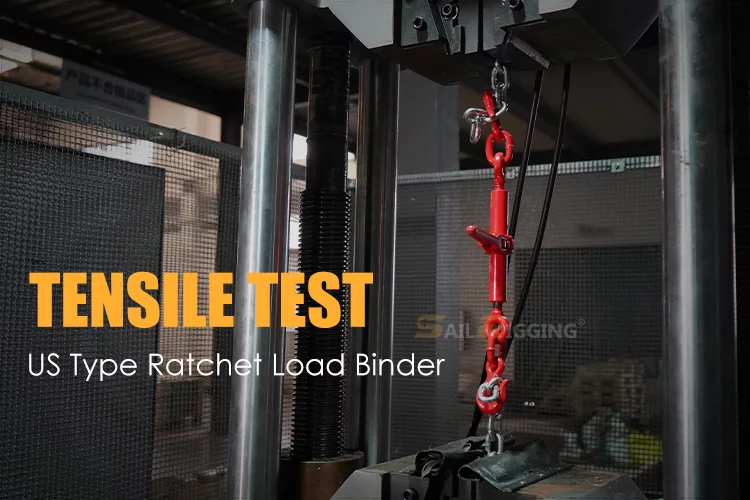
The working load limit (WLL) of a load binders is determined by testing its breaking strength through a tensile test and then dividing that strength by a safety factor. This limit value differs from the breaking strength; it represents the maximum safe load that the strapping machine is designed to withstand.
The method for determining the rated working load limit is Tensile test. Place the strapping machine in a tensile testing machine, stretch it until it breaks, and record the breaking strength. This is the maximum weight the machine can safely withstand under normal conditions. The working load limit is usually based on linear tension. Applying force from other angles will significantly reduce the breaking strength, so this is not recommended.
Load binder is fundamental to the safe and efficient transport of heavy objects. Regardless of whether you choose ratchet load binder, lever load binder, recoilless load binder, or others, you must consider that the working load matches the chain’s rating to ensure the safety of large, heavy equipment during transport. For more information, you could consult Sail Rigging.