

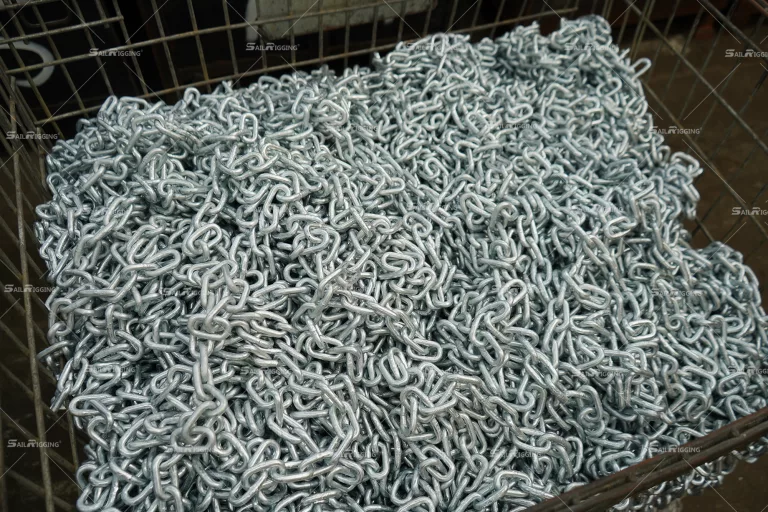
Transport chains are a crucial component in the rigging and lifting industry, commonly used for securing heavy loads during transportation. These chains are designed to provide reliable strength and durability, ensuring that cargo is safely restrained during transit. Transport chains are indispensable in industries such as shipping, construction, and agriculture, where heavy loads must be securely fastened.
Common Sizes of Transport Chains
Transport chains are available in a variety of sizes, typically measured by the diameter of the link.Also these transport chain could be assemblied with different fittings, such as J hook, link, T hook, R hook, ring, etc. The most common sizes include:
- 5/16″ (8mm)
- 3/8″ (10mm)
- 1/2″ (13mm)
- 5/8″ (16mm)
These sizes are selected based on the weight and type of load being secured. Larger chain sizes are used for heavier loads, providing higher working load limits (WLL).
Chain Grades
Transport chains are categorized by grade, which indicates the strength of the chain. The most commonly used grades for transport chains are:
- Grade 70 (G70): Often referred to as “transport chain” or “trucker’s chain,” this grade is heat-treated and designed specifically for securing loads during transport. It is widely used for binding and tie-down applications, offering a high strength-to-weight ratio.
- Grade 80 (G80): While primarily used for lifting applications, Grade 80 chains are also employed for securement in heavy-duty transport scenarios. This grade is stronger than G70 and is known for its durability in extreme conditions.
- Grade 100 (G100): Known for its superior strength, Grade 100 chains are used in both lifting and transport. They provide 25% more strength than Grade 80 chains, making them ideal for heavy-duty transport applications where maximum safety is essential.
Standards for Transport Chains
Transport chains must adhere to industry standards to ensure safety and performance. The most recognized standards include:
- ASTM A413 / NACM: This standard covers the technical specifications for transport chains, ensuring that they meet the required strength, dimensions, and material composition.
- EN 12195-3: This European standard applies to lashing chains used for securing loads on road vehicles, specifying minimum breaking strength and performance criteria.
- DOT (Department of Transportation) Regulations: In the U.S., the Department of Transportation sets specific requirements for securing cargo during transit. Transport chains used for securing loads must comply with these regulations to ensure that they meet the necessary safety standards.
Surface Treatment of Transport Chains
- Transport chains undergo various surface treatments to enhance their durability and resistance to environmental factors such as corrosion. Common surface treatments include:
- Zinc Plating: known as electro galvanized, zinc-plated chains are treated with a thin layer of zinc to provide a protective barrier against corrosion. This makes them suitable for use in outdoor environments where exposure to moisture is common.
- Galvanization: Galvanized chains are dipped in molten zinc, offering superior corrosion resistance compared to zinc plating. This makes them ideal for use in harsh environments, such as marine applications.
Powder Coating: Powder-coated chains are coated with a durable, corrosion-resistant finish, providing additional protection against wear and tear.
Transport chains are a vital part of the rigging and lifting industry, ensuring that heavy loads are securely fastened during transport. With a range of sizes, grades, and surface treatments available, it’s important to choose the right transport chain for your specific needs. Whether you’re securing loads on a truck, trailer, or heavy equipment, selecting the proper chain can make all the difference in ensuring safety and efficiency during transport. If you don’t know how to choose size or type of transport chain, you could consult Sail Rigging freely. We will be glad at service.